
A check engine light and an engine coolant temperature sensor code do not automatically mean the sensor needs replacing. The problem could be a damaged connector, an open or shorted wire, an incorrect temperature signal, or a cooling-system condition that needs further investigation.
The five related diagnostic trouble codes—P0115, P0116, P0117, P0118, and P0119—all concern the engine coolant temperature (ECT) sensor circuit, but they describe different types of faults.
For example, P0117 indicates a low circuit signal, while P0118 indicates a high circuit signal. P0116 focuses on temperature-signal performance or plausibility, and P0119 points toward intermittent or erratic circuit behavior.
Understanding those differences can help you choose the right diagnostic checks instead of replacing parts based on a code description alone.
This guide explains what each code means, the symptoms and possible causes, and how to use an OBD2 scanner and electrical testing to identify the problem.
What Do P0115, P0116, P0117, P0118, and P0119 Mean?
These are generic OBD-II powertrain trouble codes associated with the engine coolant temperature sensor circuit. Exact monitoring conditions and diagnostic procedures vary by vehicle.
| Code | Meaning | What the ECU Has Detected |
|---|---|---|
| P0115 | Engine Coolant Temperature Sensor 1 Circuit | A general fault involving the ECT sensor circuit |
| P0116 | Engine Coolant Temperature Sensor 1 Circuit Range/Performance | Temperature-signal behavior that does not meet the ECU's expected performance or plausibility criteria |
| P0117 | Engine Coolant Temperature Sensor 1 Circuit Low | ECT circuit signal voltage below the calibrated threshold |
| P0118 | Engine Coolant Temperature Sensor 1 Circuit High | ECT circuit signal voltage above the calibrated threshold |
| P0119 | Engine Coolant Temperature Sensor 1 Circuit Intermittent/Erratic | Intermittent or erratic behavior in the ECT sensor circuit |
P0115 is a general ECT circuit fault designation, while P0116 focuses on range or performance. Their diagnostic criteria may overlap in some vehicle applications, so the exact code-setting conditions should be checked in the manufacturer's service information.
Important: The words Low and High in P0117 and P0118 refer to the electrical signal, not directly to the actual coolant temperature.
A high temperature value displayed by a scanner does not, by itself, prove the engine is overheating. Likewise, a low displayed temperature does not prove the engine is cold.
The first task is to determine whether the reported temperature accurately represents the engine's actual condition.
How the ECT Sensor Circuit Works
The engine coolant temperature sensor supplies temperature information to the engine control module (ECM/PCM). The computer can use this information for fuel delivery, cold-start adjustments, engine-temperature monitoring, and other control strategies.
Many engine-management ECT sensors use a negative temperature coefficient (NTC) thermistor.
In a common two-wire NTC circuit:
- Cold coolant: Higher sensor resistance
- Warm coolant: Lower sensor resistance
- Cold sensor: Often produces a higher signal voltage
- Warm sensor: Often produces a lower signal voltage
The ECU interprets the electrical signal and converts it into a temperature value displayed through diagnostic live data.
This relationship helps explain why an electrical fault can produce a temperature reading that appears physically impossible.
Sensor arrangements and circuit thresholds vary. Some vehicles use multiple coolant-temperature sensors or separate gauge inputs, so identify the correct circuit before testing.
P0115 Code: Engine Coolant Temperature Sensor Circuit
What Does Code P0115 Mean?
The P0115 code indicates that the ECU has detected a fault associated with the engine coolant temperature sensor circuit.
It is a general circuit-related fault code. It does not identify the sensor itself as the failed component.
Possible causes include:
- Faulty ECT sensor
- Loose or disconnected sensor connector
- Damaged or corroded terminals
- Open or shorted wiring
- Circuit reference or sensor-return problems
- Less commonly, an ECU-related fault
P0115 Symptoms
Depending on the vehicle and fault, P0115 symptoms may include a check engine light, difficult starting, rough idle, unusual cooling-fan operation, poor fuel economy, or an abnormal temperature display.
Some vehicles may substitute a default coolant-temperature value when the ECT signal cannot be trusted.
That substitute value may influence fuel delivery or cooling-fan operation, but the exact behavior is manufacturer-specific.
How Do I Fix Code P0115?
Start by checking the ECT connector and wiring, especially if the code appeared immediately after engine repairs.
A connector may have been left loose, a wire may have been pulled or pinched, or an aging harness may have been damaged during nearby work.
Next, use an OBD2 scanner to examine the reported ECT temperature.
If the engine has been sitting overnight, compare the cold ECT reading with intake air temperature (IAT) and the approximate ambient temperature.
The readings do not need to match exactly, but a large unexplained difference deserves investigation.
If the ECT reading is implausible, proceed with vehicle-specific sensor and circuit testing before replacing parts.
P0116 Code: ECT Sensor Circuit Range/Performance
What Does Code P0116 Mean?
The P0116 code means the ECU has detected ECT signal behavior outside its expected range or performance criteria.
Unlike P0117 and P0118, which identify low and high electrical signal conditions, P0116 may involve a signal that remains within an electrically possible range but does not behave as expected.
Depending on the vehicle's diagnostic strategy, the ECU may evaluate the ECT reading during a cold start, compare it with other temperature information, or monitor how coolant temperature changes during engine operation.
What Causes P0116?
Possible causes include:
- ECT sensor reporting an inaccurate temperature
- Sensor or wiring faults
- Poor electrical connections
- Low coolant or trapped air affecting sensor exposure
- Thermostat or other cooling-system problems affecting warm-up
- Actual engine-temperature behavior that fails the vehicle's monitoring criteria
A thermostat problem is particularly important to consider when the engine warms up unusually slowly, or the ECT trend does not match expected operating conditions.
However, a P0116 code alone cannot establish that the thermostat is defective.
How to Diagnose P0116
Use an OBD2 scanner to inspect the ECT value before starting the engine and monitor it during warm-up.
Look for three things:
- Cold-start plausibility: Does the ECT reading make sense compared with the engine's actual cold condition?
- Warm-up behavior: Does the temperature rise in a physically reasonable way?
- Consistency: Does the reported temperature agree with other available evidence of the engine's thermal condition?
The temperature trend does not have to form a perfectly smooth line. Thermostat operation, cooling-fan activity, engine load, and ambient conditions can affect the rate of change.
If the ECT reading appears reasonable but the engine genuinely fails to warm up properly, investigate the cooling system rather than immediately replacing the sensor.
P0117 Code: Engine Coolant Temperature Sensor Circuit Low
What Does Code P0117 Mean?
The P0117 code indicates that the ECU has detected a low voltage condition in the ECT sensor circuit.
In a common two-wire NTC circuit, a low signal voltage can be interpreted as an extremely high coolant temperature.
That is why a vehicle with P0117 may display a high temperature reading even when the engine is not actually overheating.
What Can Cause a P0117 Code?
Possible causes include:
- Short to ground in the ECT signal circuit
- Faulty sensor with abnormally low resistance
- Damaged wiring or connector terminals
- Other vehicle-specific circuit faults
Does P0117 Mean the Engine Is Overheating?
Not necessarily.
P0117 describes an electrical signal condition, not a confirmed mechanical overheating event.
For example, an ECT circuit fault may cause the ECU to calculate an implausibly high temperature.
But an actual overheating condition can also occur at the same time as an electrical fault.
If the vehicle displays a high-temperature warning, do not assume it is a false alarm simply because P0117 is present.
Check for coolant loss, steam, leaks, and other evidence of genuine overheating.
Safety: If the engine is overheating, steaming, losing coolant, or displaying a severe temperature warning, stop driving safely and allow it to cool. Never open a hot, pressurized cooling system.
How to Fix Code P0117
Read and save the trouble codes and freeze-frame data first.
Then inspect the ECT live-data reading and compare it with the engine's actual condition.
If the reading is implausibly hot on a genuinely cold engine, investigate the ECT circuit.
A technician can use the manufacturer-specified procedure to check signal voltage, sensor resistance, wiring shorts, and connector integrity.
Do not assume the sensor is defective simply because the scanner reports a high temperature.
P0118 Code: Engine Coolant Temperature Sensor Circuit High
What Does Code P0118 Mean?
The P0118 code indicates that the ECU has detected a high voltage condition in the ECT sensor circuit.
In a common two-wire NTC circuit, an open circuit or high-resistance fault may cause the ECU to interpret the signal as an extremely cold temperature.
Some vehicles may display a value near -40°C (-40°F), while others use different substitute values or diagnostic behavior.
What Causes P0118 Code?
Possible causes include:
- Disconnected ECT sensor connector
- Open signal or sensor-return circuit
- Corroded or poorly seated terminals
- Damaged wiring
- Faulty ECT sensor
- Other faults affecting the circuit's electrical behavior
How to Fix P0118 Code
Start with a visual inspection.
Make sure the ECT connector is fully seated and check for corrosion, broken locking tabs, damaged insulation, or wires stretched during previous repairs.
Next, examine the ECT live-data value with the engine cold.
If the scanner displays an implausibly low temperature, determine whether the sensor signal is reaching the ECU correctly.
Electrical testing may include checking the appropriate circuit voltage, sensor resistance, and wiring continuity according to the vehicle's service manual.
Finding a reference voltage at an unplugged connector does not prove the entire wiring circuit is good. The sensor-return path, terminal contact, and circuit behavior under connected conditions may still need testing.
Can I Drive With Code P0118?
A P0118 code does not automatically mean the engine is overheating, but it can affect how the ECU manages engine operation.
Some vehicles may use substitute temperature values, change cooling-fan behavior, or experience starting and fuel-delivery problems.
Do not rely on a potentially inaccurate temperature display to determine whether the engine is safe to drive.
If there is coolant loss, steam, genuine overheating, severe drivability trouble, or another serious warning, stop driving and investigate the condition.
P0119 Code: ECT Sensor Circuit Intermittent/Erratic
What Does Code P0119 Mean?
The P0119 code indicates that the ECU has detected intermittent or erratic behavior in the ECT sensor circuit.
This can be more difficult to diagnose than a continuous open or short circuit because the temperature signal may appear normal during a brief inspection.
For example, the scanner might show a believable coolant temperature when the engine is idling. Still, the reading may suddenly jump or drop when the engine vibrates or the wiring harness moves.
What Causes P0119?
Possible causes include:
- Loose or worn connector terminals
- Intermittent wiring opens or shorts
- Corrosion or moisture in the connector
- Heat- or vibration-sensitive sensor faults
- Poor circuit connections
How to Fix P0119 Code
Use the scanner's live-data graphing function, if available, to monitor ECT continuously.
Look for sudden changes that cannot reasonably be explained by actual coolant-temperature movement.
With the engine and surrounding components in a safe condition, a technician may gently move accessible sections of the sensor harness while watching live data.
If the reading changes abruptly when a particular section moves, inspect that area for damaged wiring or poor terminal contact.
Keep hands, tools, and wiring away from belts, fans, pulleys, and hot components. Electric cooling fans can start unexpectedly.
If the fault only occurs when the engine is hot or during driving, additional testing under the conditions recorded in the freeze-frame data may be necessary.
A sensor that passes one cold resistance measurement may still have an intermittent fault.
P0117 vs P0118 vs P0119: What's the Difference?
These three codes are particularly easy to confuse.
| Code | Electrical Condition | Common Diagnostic Direction |
|---|---|---|
| P0117 | Signal voltage too low | Check for short-to-ground or low-resistance faults |
| P0118 | Signal voltage too high | Check for open circuits, disconnected connectors, or high-resistance faults. |
| P0119 | Signal intermittent or erratic | Check connectors, wiring movement, vibration, and heat-related faults |

These are diagnostic directions for common circuit designs, not confirmed diagnoses.
The same ECT sensor can produce different symptoms depending on how its circuit fails. A low or high signal may be continuous, while an intermittent connection may cause unpredictable readings.
That is why reading the code description is only the beginning of diagnosis.
How to Diagnose P0115–P0119 with an OBD2 Scanner
The most efficient approach is to check the temperature information the ECU receives before removing the sensor.
Step 1: Read All Trouble Codes and Save Freeze-Frame Data
Connect a compatible OBD2 scanner and record the stored, pending, and relevant permanent trouble codes where supported.
Save the freeze-frame data before clearing anything.
Pay attention to the engine speed, vehicle speed, load, and reported coolant temperature when the fault was detected.
Remember that freeze-frame ECT data may itself be unreliable if the ECT signal is faulty.
Step 2: Check the Cooling System and Visible Connections
With the engine cold, inspect the coolant level according to the vehicle manufacturer's procedure.
Look for visible leaks, damaged hoses, disconnected ECT wiring, corrosion, and damaged connector terminals.
If the engine has recently undergone repair, pay particular attention to wiring or connectors near the area that was disturbed.
Do not overlook actual overheating or coolant loss simply because an ECT code is present.
Step 3: Check Cold-Start ECT, Live Data
After the vehicle has been sitting long enough for temperatures to stabilize, switch the ignition on and inspect the ECT reading before starting the engine.
Compare it with IAT and approximate ambient temperature.
A reasonable comparison supports signal plausibility, but it does not prove the sensor is fault-free.
There is no universal allowable ECT–IAT difference for every vehicle and condition.
Step 4: Monitor the ECT Warm-Up Trend
Start the engine only if it is safe to do so.
Monitor ECT live data as the engine warms up.
Look for a generally believable temperature rise rather than expecting one exact operating temperature or a perfectly straight trend.
A short plateau or slight dip may occur as the thermostat begins to open, depending on the cooling-system design and operating conditions.
If the engine's actual thermal condition and the reported ECT temperature disagree, investigate why.
Step 5: Inspect the ECT Connector and Wiring
Look for loose terminals, corrosion, broken insulation, damaged harness sections, or wires that may have been pulled during previous repairs.
For intermittent faults such as P0119, monitoring live data while checking accessible wiring can be particularly useful.
Do not damage sealed connector terminals while probing.
Step 6: Confirm the Fault with Electrical Testing
If the scan data and visual inspection indicate a sensor-circuit problem, use a multimeter and the vehicle-specific service procedure.
Possible checks include:
- Sensor resistance with the sensor electrically isolated and the circuit unpowered
- Signal voltage under the specified connected and powered test conditions
- Sensor-return and wiring integrity
- Open-circuit and short-circuit checks with the appropriate modules disconnected when required
There is no single resistance value or voltage threshold that can diagnose every ECT sensor.
Compare measurements with the correct OEM specifications.
Can Unplugging the ECT Sensor Help Diagnose P0117 or P0118?
On some two-wire NTC systems, disconnecting the ECT sensor can help check how the ECU responds to an open circuit.
With the ignition off, disconnect the ECT sensor. Then switch the ignition on and observe the ECT live-data reading using an OBD2 scanner, following the vehicle's service procedure.
On some vehicles, an open circuit causes the scanner to display an extremely cold value, such as -40°C (-40°F). This is a circuit-response clue, not proof that the sensor itself is faulty.
Certain OEM procedures also use a fused jumper between specified connector terminals to simulate a low-resistance condition. The ECU may then report an extremely high temperature.
Never short connector terminals without confirming the correct pinout and an approved manufacturer procedure. An incorrect connection can damage the ECU.
A change in the scanner reading helps confirm that the ECU responds to the simulated circuit condition. It does not independently rule out every possible wiring or connector fault.
What Resistance Should an ECT Sensor Have?
Many ECT sensors use an NTC thermistor, meaning resistance decreases as temperature increases.
For example, the Bosch Motorsport NTC M12 sensor has the following nominal resistance values:
| Temperature | Example Resistance |
|---|---|
| 20°C (68°F) | Approximately 2,500 Ω (2.5 kΩ) |
| 80°C (176°F) | Approximately 323 Ω |
These values illustrate a specific NTC sensor curve, not a universal specification for every ECT sensor.
To check resistance, switch off the ignition, disconnect the sensor from the circuit, and measure resistance across the specified sensor terminals.
An OL reading on a multimeter may indicate an open circuit or an out-of-range measurement. Verify the meter setting and test connections before interpreting the result.
Compare the measured resistance at the sensor's actual temperature with the correct vehicle-specific resistance chart. A sensor that changes resistance with temperature is not necessarily within specification.
Step 7: Repair, Clear Codes, and Retest
Repair the confirmed fault, whether it involves the sensor, connector, wiring, or another related condition.
Clear the codes only after recording the original diagnostic information and completing the repair.
Then repeat the relevant cold-start, warm-up, or operating-condition checks.
Confirm that the ECT signal behaves plausibly and that the fault does not return when the applicable diagnostic monitor runs.
A code disappearing immediately after clearing does not, by itself, prove the problem is fixed.
OBD2 Scanner for ECT Sensor Code Diagnosis
You do not need a particular scanner model to diagnose an ECT sensor circuit. The essential capabilities are access to the relevant diagnostic trouble codes and live temperature data.
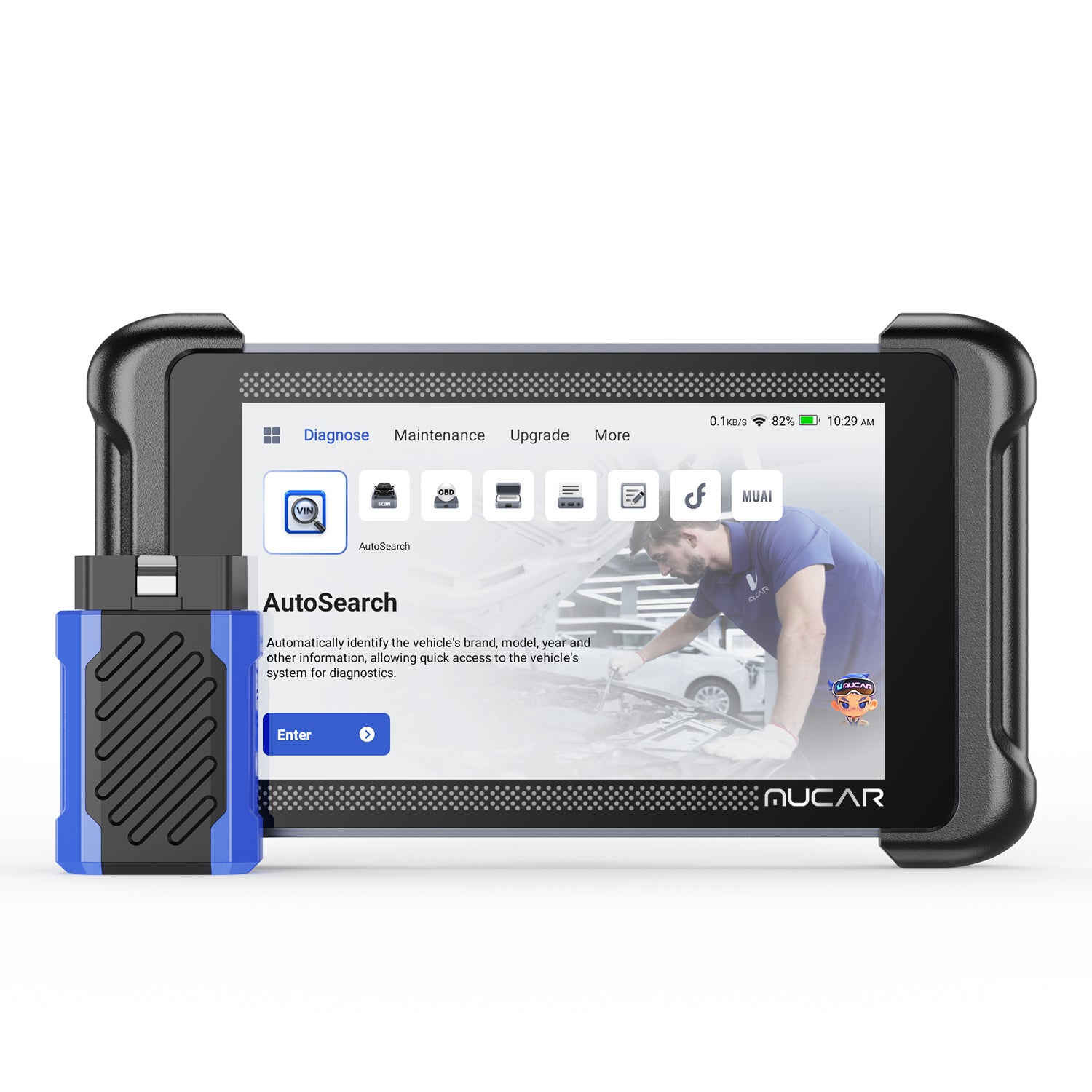
MUCAR 783BT
The MUCAR 783BT provides diagnostic trouble-code functions and live-data monitoring on supported vehicles, making it a practical option for checking cold-start ECT readings, following warm-up behavior, and investigating irregular temperature signals.
- Diagnostic Trouble Codes
- Live Data Monitoring
- Full-System Diagnostics
- ECT Temperature Tracking
- 7" Touchscreen
- Bluetooth Connectivity
Vehicle coverage, available parameters, and diagnostic functions vary by make, model, year, engine, and control system. Confirm compatibility before relying on a specific function.
Vehicle coverage, available parameters, and diagnostic functions vary by make, model, year, engine, and control system. Confirm compatibility before relying on a specific function.
Why Does an ECT Code Return After Replacing the Sensor?
Replacing the ECT sensor does not repair a broken wire, loose terminal, corroded connector, or an unrelated cooling-system problem.
If P0115, P0117, P0118, or P0119 returns after sensor replacement, investigate the circuit rather than repeatedly installing new sensors.
Check whether the connector is fully seated, whether the terminals provide reliable contact, and whether the wiring has been damaged.
For P0116, also consider whether the actual warm-up behavior or sensor exposure conditions explain the performance fault.
If coolant was drained during replacement, make sure the cooling system has been refilled and bled according to the manufacturer's instructions.
Air trapped in the system can cause cooling problems and may affect the temperature experienced by the sensor.
A new sensor is not proof that the complete ECT system is working correctly.
Can an ECT Sensor Code Cause Overheating?
An ECT circuit fault and genuine engine overheating are different problems, although they can occur together.
A faulty ECT signal may affect cooling-fan control on some vehicles, potentially contributing to cooling problems.
But an ECT code does not establish that the sensor caused overheating.
Actual overheating may involve coolant loss, a leaking radiator, trapped air, thermostat problems, fan faults, circulation problems, or other cooling-system failures.
Likewise, an engine may be overheating while the dashboard gauge displays an inaccurate or substituted value.
Never dismiss visible steam, coolant loss, or a severe temperature warning simply because the scanner also reports an ECT sensor code.
P0115–P0119 vs P0128: Are They the Same Problem?
No.
P0115–P0119 concern ECT sensor circuit faults or signal-performance problems.
P0128 generally indicates that the engine coolant temperature has not reached the expected regulating temperature within the calibrated conditions.
A thermostat that remains open, an actual slow warm-up condition, or inaccurate temperature information may be relevant to P0128 diagnosis.
The correct repair depends on confirming what the engine and cooling system are actually doing.
A P0128 code does not automatically mean the ECT sensor is defective.
Frequently Asked Questions
What Does Code P0115 Mean?
P0115 indicates an engine coolant temperature sensor circuit fault. Possible causes include the sensor, connector, wiring, or another circuit-related problem. The code does not identify a specific part that must be replaced.
What Is Code P0116?
P0116 indicates that ECT sensor circuit performance or plausibility does not meet the ECU's expected criteria. Diagnosis may involve cold-start temperature comparisons, warm-up monitoring, sensor checks, and cooling-system inspection.
What Does Code P0117 Mean?
P0117 indicates a low ECT circuit signal voltage. On common NTC circuits, this may cause the ECU to calculate an implausibly high coolant temperature. It does not automatically prove the engine is overheating.
What Does Code P0118 Mean?
P0118 indicates a high ECT circuit signal voltage. Possible causes include an open circuit, disconnected sensor, poor connector contact, or a faulty sensor. Some vehicles may display an extremely cold substitute reading.
What Is Code P0119?
P0119 indicates intermittent or erratic ECT circuit behavior. Loose connectors, damaged wiring, and faults affected by vibration or temperature are possible causes.
Can a Bad Thermostat Cause a P0117 Code?
A bad thermostat affects coolant-temperature regulation, but P0117 specifically describes a low electrical signal condition in the ECT circuit. Do not assume a thermostat problem directly explains P0117 without testing the circuit.
Can I Drive With a P0117 or P0118 Code?
Driving safety depends on the vehicle's actual condition, not just the trouble code. If there is overheating, steam, coolant loss, severe drivability trouble, or a serious temperature warning, stop driving safely and investigate. An unreliable temperature signal can make it harder to assess engine temperature.
How Do I Fix Code P0118 Without Replacing the Sensor?
Check the connector, terminals, and wiring first. If an open circuit or poor connection is responsible, repairing that fault may resolve the code without replacing the sensor. Confirm the diagnosis with live data and vehicle-specific electrical tests.
Why Does My ECT Code Keep Coming Back?
The original fault may not have been corrected, or the code-setting conditions may only occur intermittently. Save diagnostic information, inspect the circuit, repeat the relevant tests, and verify that the repair resolves the underlying problem.
Will Clearing P0115–P0119 Fix the Problem?
Clearing the codes removes stored diagnostic information but does not repair a faulty sensor or circuit. If the underlying condition remains, the code may return when the ECU runs the relevant monitor.
Conclusion: Diagnose the ECT Circuit Before Replacing Parts
P0115, P0116, P0117, P0118, and P0119 belong to the same ECT sensor code family, but they do not all point to the same failure.
P0115 indicates a general circuit fault. P0116 concerns range or performance. P0117 and P0118 identify low and high signal conditions, while P0119 points toward intermittent or erratic circuit behavior.
The most useful starting point is to read the codes, inspect the cooling system, and check ECT live data.
From there, compare the reported temperature with the engine's actual condition and use connector, wiring, and electrical tests to identify the cause.
An ECT code tells you where to investigate—not which part to replace.

Share:
How to Test a Coolant Temperature Sensor with an OBD2 Scanner
P0128 Coolant Thermostat Code Explained