
A P0128 code means your engine coolant temperature is staying below the expected thermostat-regulating temperature or taking too long to reach it. A thermostat stuck open is the most common cause, but low coolant, inaccurate temperature sensor readings, and other cooling system problems can also trigger the code.
If your check engine light is on but your car still drives normally, P0128 usually isn't an immediate emergency. However, you should identify the cause before replacing parts or continuing to drive for an extended period.
What Does the P0128 Code Mean?
The OBD2 diagnostic trouble code P0128 stands for Coolant Thermostat (Coolant Temperature Below Thermostat Regulating Temperature).
When you start a cold engine, the thermostat restricts coolant flow to the radiator so the engine can warm up efficiently. As coolant temperature rises, the thermostat opens to help maintain the appropriate operating temperature.
The engine control module (ECM) monitors this warm-up process using engine coolant temperature (ECT) data and, depending on the vehicle, information such as intake air temperature (IAT), engine run time, and operating conditions.
If the coolant doesn't warm up as expected, the ECM may store DTC P0128 and illuminate the check engine light.
This is also called a thermostat rationality fault. It doesn't necessarily mean the thermostat has failed. The computer has detected an unexpected temperature pattern, not directly inspected the thermostat itself.
Common P0128 Symptoms
Many drivers notice little difference in how their vehicle performs. The most common P0128 symptoms include:
- Check engine light: Often the first or only noticeable warning.
- Slow engine warm-up: The temperature gauge takes longer than usual to reach its normal position.
- Low temperature readings: Coolant temperature remains below the expected range.
- Weak cabin heating: The heater takes longer to produce warm air, especially in winter.
- Reduced fuel economy: An engine running persistently below its intended temperature may consume more fuel.
- Temperature dropping at highway speeds: Increased airflow through the radiator can make a leaking or stuck-open thermostat more noticeable.
A particularly useful clue is an engine that warms up in city traffic but becomes cooler during steady highway driving.
However, the dashboard temperature gauge alone cannot confirm the cause. OBD2 live data provides a more useful view of the actual temperature readings reported to the ECM.
What Causes a P0128 Code?
1. Thermostat Stuck Open or Opening Too Early
A faulty thermostat is the leading cause of a P0128 engine code.
When the thermostat cannot close properly, coolant may flow through the radiator before the engine has warmed up. This slows the temperature rise and may prevent the engine from maintaining its intended operating temperature.
A thermostat that opens earlier than its specified temperature can produce similar symptoms.

2. Low Coolant Level
Low coolant can interfere with normal temperature measurement and cooling system operation, particularly when air enters the system.
Check the coolant level when the engine is completely cold. If it is low, look for leaks rather than simply topping it off repeatedly.
3. Faulty Engine Coolant Temperature Sensor
The ECT sensor tells the ECM how hot the coolant is.
If the sensor reports a temperature lower than the actual coolant temperature, the ECM may detect an apparent warm-up failure even when the thermostat works correctly.
Sensor wiring and connector problems can also produce inaccurate readings.
4. Cooling Fan or Temperature Control Problems
A cooling fan operating when it shouldn't can contribute to excessive cooling under certain conditions.
Some modern vehicles also use electronically controlled thermostats or coolant control valves. A fault in these components may affect engine warm-up.
Other less common possibilities include inaccurate IAT readings, trapped air after cooling system repairs, or vehicle-specific control issues.
Important: P0128 identifies a temperature regulation problem. It doesn't prove which component needs replacement.
How to Diagnose and Fix Code P0128
Before replacing the thermostat, use the following diagnostic sequence to narrow down the problem.
Step 1. Confirm P0128 with an OBD2 Scanner
Connect an OBD2 scanner and read the stored diagnostic trouble codes.
Check whether P0128 appears alone or alongside related codes such as P0115–P0119, which indicate ECT sensor circuit or performance problems.
Record any available freeze-frame information, including coolant temperature, intake air temperature, and engine operating conditions.
If the vehicle also has an overheating warning or multiple temperature-related codes, investigate those conditions before assuming the thermostat is stuck open.
Step 2. Check Coolant Level and Leaks
With the engine completely cool, inspect the coolant reservoir and other accessible cooling system components.
Look for:
- Coolant below the specified level
- Leaks around hoses, the radiator, or thermostat housing
- Signs of coolant loss after recent repairs
- Incorrect coolant or visible contamination
Never remove a pressurized coolant cap while the engine is hot. Escaping coolant and steam can cause serious burns.
Step 3. Monitor ECT Live Data During Warm-Up
This is one of the most useful tests for distinguishing a thermostat problem from an inaccurate sensor reading.
Start with an engine that has been sitting long enough to cool completely.
Before starting: Compare the ECT and IAT readings on your scanner. After a proper cold soak, both should generally be close to the surrounding temperature, allowing for sensor and environmental differences.
During warm-up: Start the engine and monitor ECT as the temperature rises. A healthy system should show a generally progressive increase toward the vehicle's specified operating range.

During driving: If the engine warms up but coolant temperature drops substantially during steady highway driving, a thermostat that leaks or opens too early becomes a stronger possibility.
For example, if live data repeatedly levels off around 78–80°C (172–176°F), that may be lower than expected for some engines. However, the reading alone doesn't establish a fault. Compare it with the correct service specifications for that vehicle.
If scan data appears inconsistent with the actual engine temperature, investigate the ECT sensor and its circuit before replacing the thermostat.
Step 4. Check Thermostat and Cooling Fan Operation
On many conventional cooling systems, the upper radiator hose runs from the engine outlet toward the radiator. During a cold start, it may remain relatively cool until the thermostat opens, then become noticeably hotter.
If the upper hose warms gradually from the beginning, coolant may be circulating through the radiator too early, suggesting a thermostat that is stuck open or leaking.
However, thermostat location and coolant routing vary by vehicle. Some engines have the thermostat on the lower radiator hose side, and bypass flow can affect hose temperatures. Identify the thermostat location and coolant flow path in the vehicle's service information before interpreting hose temperatures.
Use ECT live data and appropriate temperature measurements to confirm the diagnosis. Never touch hot hoses or moving cooling fans.
Step 5. Repair the Cause and Verify the Fix
Once the problem is confirmed, the appropriate P0128 fix may involve:
- Replacing a stuck-open thermostat or thermostat housing assembly
- Repairing coolant leaks and restoring the correct coolant level
- Repairing a faulty ECT sensor, connector, or wiring
- Correcting cooling fan or coolant control valve faults
- Removing trapped air using the manufacturer's bleeding procedure
If replacing the thermostat, use the correct opening-temperature specification for the exact engine. An incorrectly rated replacement can allow P0128 to return.
After repairs, clear the code when appropriate and monitor ECT during another warm-up and road test. Confirm that the engine reaches and maintains its specified temperature and that the fault does not return.
Clearing diagnostic codes may reset emissions readiness monitors, so verify their status before an emissions inspection.
Using THINKSCAN 689BT to Diagnose P0128
The THINKCAR THINKSCAN 689BT is a standalone diagnostic scanner suitable for investigating engine temperature problems.
For a P0128 diagnosis, its relevant capabilities include:
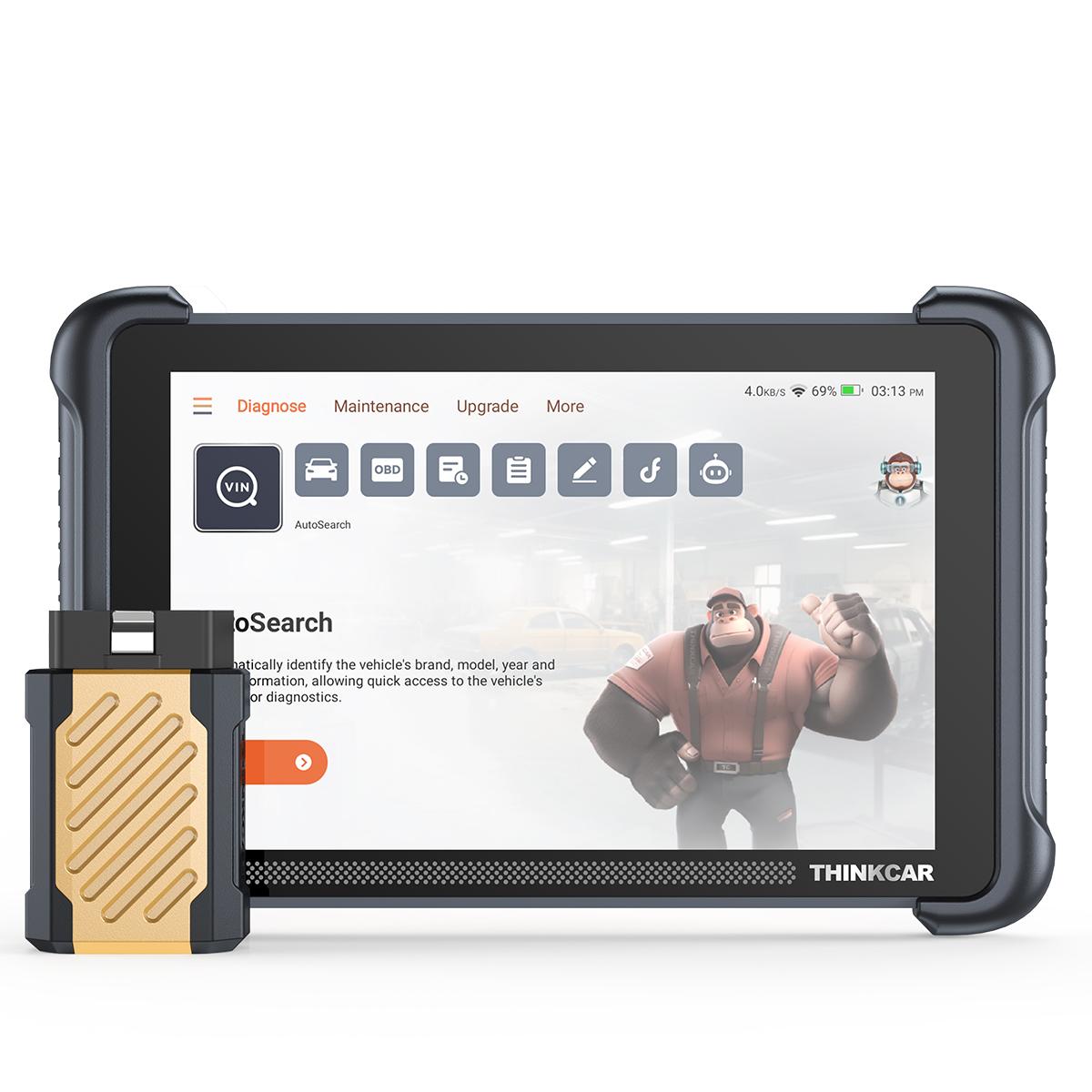
THINKSCAN 689BT
- Read and clear diagnostic trouble codes to identify P0128 and related faults.
- View live ECT and IAT data to examine coolant temperature readings during engine warm-up.
- Graph live data to make temperature changes easier to follow.
- Perform supported active tests when additional component testing is required.
The key advantage is being able to observe what the ECM reports before deciding whether the thermostat, sensor, or another component needs attention.
An OBD2 scanner cannot directly prove that a mechanical thermostat is defective. Its live data provides diagnostic evidence that should be combined with physical checks and vehicle-specific service information.
Can You Drive with a P0128 Code?
Short-distance driving is often possible with an isolated P0128 code, provided the engine is not overheating, coolant level is normal, and the vehicle otherwise operates normally.
A thermostat stuck open usually causes an engine to run cooler than intended rather than immediately overheating.
However, prolonged operation at an abnormally low temperature can reduce fuel efficiency, increase emissions, and contribute to long-term engine wear.
Do not continue driving if you notice:
- An overheating warning or rapidly rising temperature gauge
- Steam or significant coolant leakage
- Severe engine performance problems
- Other warning signs suggesting a more serious cooling system failure
If these occur, stop safely, shut off the engine, and arrange appropriate assistance.
P0128 is usually less urgent than an overheating fault, but it should still be diagnosed and repaired promptly.
How Much Does It Cost to Fix P0128?
The P0128 repair cost depends on the vehicle and the component responsible.
A standalone thermostat may cost only a few tens of dollars, while an integrated thermostat housing or electronically controlled coolant component can cost considerably more.
Labor also varies. Some thermostats are easily accessible, while others require removing additional components and refilling or bleeding the cooling system.
A sensor replacement, coolant leak repair, or wiring repair will have a different cost.
Because several faults can produce the same code, confirming the cause before buying parts is often the best way to avoid unnecessary expense.
Frequently Asked Questions
Is P0128 Always a Bad Thermostat?
No. A stuck-open thermostat is the most common cause, but low coolant, inaccurate ECT sensor readings, and other temperature control problems can also trigger P0128.
Compare live temperature data with actual engine conditions before replacing parts.
Can Cold Weather Cause a P0128 Code?
Cold weather can make an existing warm-up problem more noticeable.
For example, a thermostat that leaks slightly may allow the engine to reach an acceptable temperature on a warm day but struggle during a cold morning or highway drive.
A P0128 code that disappears when the weather warms up doesn't necessarily mean the underlying problem has been fixed.
Will a P0128 Code Clear Itself?
Yes, the check engine light may turn off if the vehicle completes enough successful diagnostic checks.
On many OBD2 vehicles, P0128 is monitored across driving cycles. Some manufacturers, including Subaru on certain models, require the fault to occur during two consecutive driving cycles before illuminating the check engine light.
Once the temperature regulation problem is no longer detected, the light may eventually turn off. However, stored or permanent trouble codes can remain until their specific clearing conditions are met.
If P0128 disappears during warmer weather, don't assume the thermostat has repaired itself. Check ECT live data and confirm that the engine warms up normally.
Why Does P0128 Come Back After Replacing the Thermostat?
A recurring P0128 code may indicate an incorrectly rated thermostat, trapped air, inaccurate ECT readings, or another unresolved cooling system problem.
A 2011 Subaru Outback owner reported that P0128 returned after two thermostat replacements, with OBD2 live data showing coolant temperatures around 78–80°C (172–176°F). The reported temperature alone was not enough to identify the cause.
Manufacturer service bulletins can provide additional clues. For example, Subaru bulletin 11-111-12R identifies coolant temperature differences between cylinder banks and trapped air as possible contributors to P0128 on certain 2011–2012 six-cylinder Legacy, Outback, and Tribeca models. The bulletin describes a revised heater hose pipe to address the issue.
Other Subaru engines have different service bulletins and repair procedures. Always verify the exact engine and applicable service information before replacing another thermostat.
Can P0128 Appear with P0117 or P0118?
Yes. P0117 and P0118 relate to ECT sensor circuit signal conditions, while P0128 concerns coolant temperature regulation.
If these codes appear together, investigate the ECT circuit and actual cooling system condition. Do not assume the engine is simply running too cold.
How Long Can You Drive with a P0128 Code?
There is no universal safe mileage or number of days.
If P0128 is the only code and the vehicle has no overheating, coolant loss, or drivability symptoms, a short trip to arrange repairs may be reasonable. Continuing for weeks or months without diagnosis is not recommended.
Final Thoughts
The P0128 code usually means the engine isn't warming up as expected, and a thermostat stuck open is the most likely cause.
However, replacing the thermostat without checking coolant level, ECT live data, and other cooling system conditions can lead to unnecessary repairs.
Start with the code and available freeze-frame information, observe coolant temperature during warm-up, and compare the results with the manufacturer's specifications. A scanner such as the THINKSCAN 689BT can help you gather the information needed to make a more informed repair decision.

Share:
P0115–P0119 Coolant Temperature Sensor Codes Explained
Bad car thermostat Symptoms