
When your car acts up, guessing the problem can waste time, money, and even lead to unnecessary part replacements. Modern vehicles are complex, but AI-assisted diagnostic tools can help identify faults faster, explain possible causes, and guide more confident repairs.
This guide explains how to choose reliable diagnostic tools and how AI support can make auto repair more accurate and efficient, with a closer look at advanced options like the THINKCAR ThinkScan 689BT bidirectional scan tool.
Why Traditional Diagnostics Fall Short in Modern Vehicles
Modern vehicles are intricate networks of electronic systems, making traditional diagnostic methods often insufficient. Understanding the limitations of basic code readers and the need for more sophisticated tools is the first step toward effective auto repair.
The Evolution of Vehicle Diagnostics: From Basic to Bidirectional
Early diagnostic tools primarily read generic trouble codes, offering limited insight into complex issues. Today, advanced bidirectional scanners allow for active testing and control of vehicle components, providing a much deeper understanding of system malfunctions. This shift is crucial for accurately diagnosing issues in today's technologically advanced cars.
The Role of AI in Enhancing Diagnostic Accuracy
AI-powered insights are revolutionizing vehicle diagnostics by analyzing vast amounts of data, identifying patterns, and even predicting potential failures. This capability significantly reduces diagnostic time and improves the accuracy of repairs, moving beyond simple code reading to intelligent problem-solving.
Choosing the Right AI-Assisted Diagnostic Tool for Your Needs

Selecting the appropriate diagnostic tool is crucial for effective auto repair. Consider factors like vehicle compatibility, desired functionalities, and the level of AI assistance offered to make an informed decision.
Step 1: Assess Your Vehicle's Compatibility and System Requirements
Before purchasing, verify that the diagnostic tool supports your vehicle's make, model, and year. Look for tools that offer comprehensive coverage for various systems, including engine, transmission, ABS, and airbags. Ensure the tool is compatible with OBD2 standards for modern vehicles.
Step 2: Identify Essential Diagnostic Features and Functions
Consider what specific tasks you need to perform. Do you require basic code reading, live data streaming, or advanced functions like bidirectional control and special reset functions? Tools like the THINKCAR ThinkScan 689BT offer 28 reset functions and all-system diagnosis for all cars, providing extensive capabilities.
Step 3: Evaluate AI-Powered Capabilities and Data Analysis
Look for tools that integrate AI for enhanced diagnostics. This can include AI-powered insights, intelligent diagnosis, and cloud-based diagnostics for remote assistance. These features can significantly improve the speed and accuracy of problem identification.
Step 4: Consider Connectivity Options and User Interface
Bluetooth diagnostic tools offer convenience and flexibility. A user-friendly interface with clear data presentation is also vital for efficient operation. Ensure the software is regularly updated and easy to navigate.
Step 5: Review Software Updates, Support, and Warranty
Prioritize brands that offer free lifetime software updates and reliable customer support. A good warranty, such as a 1-year extended warranty, provides peace of mind and protects your investment.
Shop: THINKSCAN 689BT
Maximizing the Potential of Your AI Diagnostic Tool

Once you have your AI-assisted diagnostic tool, understanding how to use it effectively will unlock its full potential for efficient and accurate auto repairs.
Performing an Initial Vehicle Scan and Interpreting Results
Connect your diagnostic tool to the vehicle's OBD2 port and initiate a full system scan. Pay close attention to any diagnostic trouble codes (DTCs) and live data streams. AI assistance can help interpret complex data and suggest potential causes for identified issues.
Utilizing Bidirectional Control for Component Testing
For advanced diagnostics, leverage bidirectional control to actively test components like fuel injectors, solenoids, and relays. This allows you to confirm component functionality and pinpoint faulty parts more precisely.
Leveraging AI for Predictive Maintenance and Troubleshooting
Some AI diagnostic tools can offer predictive maintenance insights by analyzing historical data and identifying potential future failures. When troubleshooting, use the tool's guided diagnostics and knowledge base to systematically address problems.
Shop: MUCAR 892BT
Advanced Applications and Future Trends in Auto Diagnostics
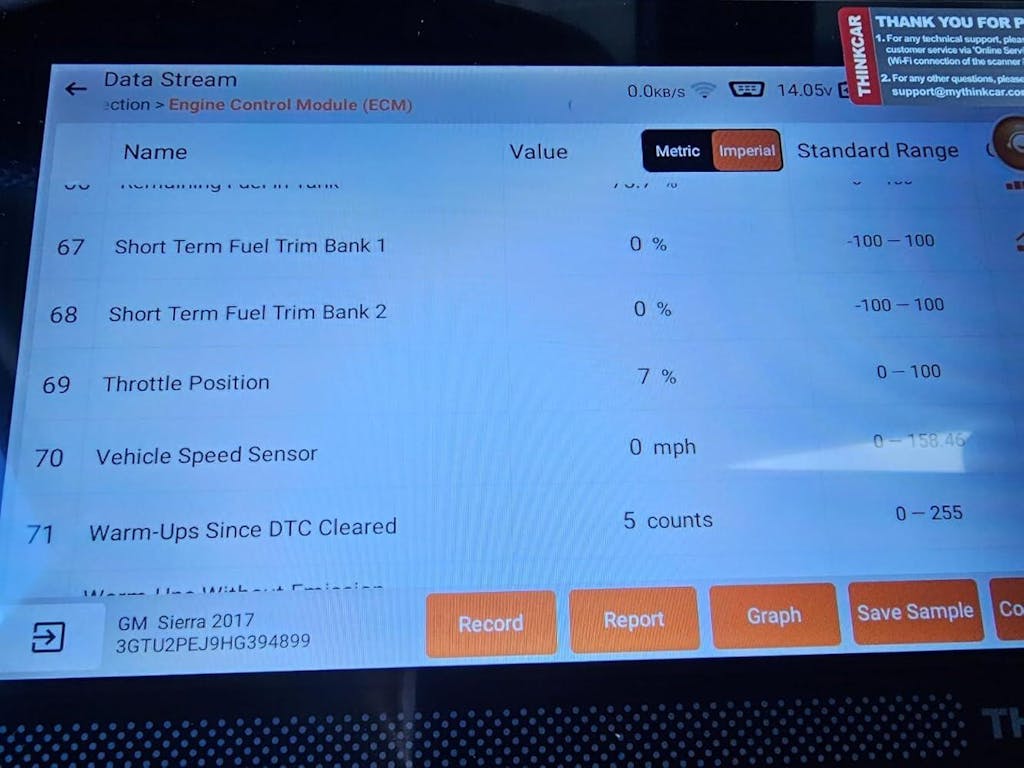
The field of automotive diagnostics is constantly evolving, with new technologies emerging to address the complexities of modern vehicles.
Integrating ADAS Calibration and EV Battery Diagnostics
As vehicles become more advanced, diagnostic tools are incorporating features for ADAS calibration and EV battery diagnostics. These specialized functions are crucial for maintaining the safety and performance of electric and autonomous vehicles.
Shop: THINKSCAN 672
Troubleshooting Common Diagnostic Tool Issues
Even with advanced tools, you might encounter occasional issues. Here's how to address some common problems:
- Problem: The tool won't connect to the vehicle.
- Cause: Loose connection, blown fuse in the OBD2 port, or incompatible protocol.
- Fix: Ensure a secure connection, check the vehicle's fuse box, and verify tool compatibility with your vehicle's protocol.
- Problem: Inaccurate or inconsistent readings.
- Cause: Outdated software, faulty cable, or interference.
- Fix: Update the tool's software, try a different OBD2 cable, and minimize electronic interference.
- Problem: Limited functionality or missing features.
- Cause: Software subscription expired, or the tool model doesn't support certain functions.
- Fix: Check your software subscription status and consider upgrading to a more advanced model if needed.
Conclusion: Empowering Your Auto Repairs with AI
Embracing AI-assisted diagnostic tools is no longer a luxury but a necessity for efficient and accurate auto repairs in today's complex automotive landscape. By choosing reliable devices like the THINKCAR ThinkScan 689BT and leveraging their advanced capabilities, you can confidently diagnose issues, perform effective maintenance, and ensure your vehicle's optimal performance.
Ready to revolutionize your auto repair experience? Explore the full range of THINKCAR Vehicle Scanners & Diagnostic Tools, including the ThinkScan Series and AI Diagnostic Series, at the Official THINKCAR Shop today.
FAQ
What are the benefits of using an advanced vehicle scanner?
Advanced vehicle scanners offer comprehensive system diagnosis, live data streaming, bidirectional control, and often AI-powered insights, leading to more accurate and efficient repairs compared to basic code readers.
How do I ensure my diagnostic tool stays up-to-date?
Look for brands that provide free lifetime software updates or offer affordable software renewal options. Regularly checking for and installing updates ensures your tool has the latest vehicle coverage and features.
Can a diagnostic tool help with preventive maintenance?
Yes, many advanced diagnostic tools can provide data that helps identify potential issues before they become major problems, contributing to proactive and preventive maintenance strategies.
What is bidirectional control in a diagnostic tool?
Bidirectional control allows the diagnostic tool to send commands to vehicle components and systems, enabling active testing and verification of their functionality, which is crucial for accurate troubleshooting.
Are there diagnostic tools suitable for electric vehicles (EVs)?
Yes, specialized diagnostic tools are emerging that offer EV battery diagnostics and other EV-specific functionalities to address the unique needs of electric vehicles.
Table of Contents
- Why Traditional Diagnostics Fall Short in Modern Vehicles
- Choosing the Right AI-Assisted Diagnostic Tool for Your Needs
- Maximizing the Potential of Your AI Diagnostic Tool
- Advanced Applications and Future Trends in Auto Diagnostics
- Troubleshooting Common Diagnostic Tool Issues
- Conclusion: Empowering Your Auto Repairs with AI
- FAQ

Share:
Resets, Relearns & Active Tests: 3 Scan Tools Under $1,000 That Handle All Three
Bluetooth Scanners for Full-System Scans Beyond Check Engine Lights