
A faulty mass air flow (MAF) sensor can cause major headaches, leading to poor fuel delivery, sluggish engine performance, and failed emissions tests. However, symptoms like a rough idle, hesitation during acceleration, and terrible fuel economy aren't unique to the MAF. Vacuum leaks, ignition misfires, and fuel system issues can mimic these exact same complaints.
That’s why guessing and throwing parts at the problem is a bad idea.
The most reliable way to figure out what's going on is to perform a proper MAF sensor test using an OBD2 live data scanner. By tracking real-time airflow, you can see if the sensor is sending accurate information to the Engine Control Unit (ECU).
This guide breaks down exactly how to test a MAF sensor, what MAF sensor readings you should look for, and how to spot a failing unit before spending money on a replacement.
What Does a MAF Sensor Do?
Typically installed right between your air filter housing and the throttle body, the mass air flow sensor has one main job: measuring the exact mass of air entering the engine. The ECU relies on this metric to calculate the perfect air-fuel ratio.
Most modern vehicles display this mass air flow sensor reading in grams per second (g/s). As you step on the gas and airflow increases, that number should climb. When the engine slows down, the numbers should drop.
When a sensor goes bad, those calculations get thrown out of whack, messing up your fuel delivery, engine power, and fuel economy.
Signs It's Time for a MAF Sensor Test
Before grabbing your scanner, look out for these classic warning signs that hint at an airflow issue:
- An illuminated Check Engine Light
- Hesitation or stumbling when accelerating
- A sudden drop in engine power
- Rough idling or intermittent stalling
- A noticeable spike in gas consumption
If the onboard computer detects a glitch, it will usually trigger specific diagnostic trouble codes (DTCs). The most common MAF-related trouble codes are P0100, P0101, P0102, P0103, and P0104. While these codes don’t automatically mean the sensor is completely dead, they are your cue that it's time for a deep-dive testing MAF sensor routine.
OBD2 Scanners for MAF Sensor Diagnostics
Reading airflow data is one of the most effective ways to diagnose a suspected MAF sensor problem. However, not every code reader can display detailed live data, fuel trim values, or manufacturer-specific parameters.
If you're testing a MAF sensor, look for a scanner that can display:
- Mass Air Flow (MAF) readings
- Engine RPM
- Engine Load
- Short-Term Fuel Trim (STFT)
- Long-Term Fuel Trim (LTFT)
- Diagnostic Trouble Codes (DTCs)
For DIY vehicle owners, the MUCAR BT200 MAX provides live data monitoring, fault code reading, and fuel trim analysis in a compact Bluetooth scanner.
For more advanced diagnostics, scanners such as the MUCAR 682 and THINKSCAN 689BT offer enhanced live data capabilities, graphing functions, and full-system diagnostics that can help identify airflow-related problems more efficiently.
Recommended OBD2 Scanners for MAF Testing
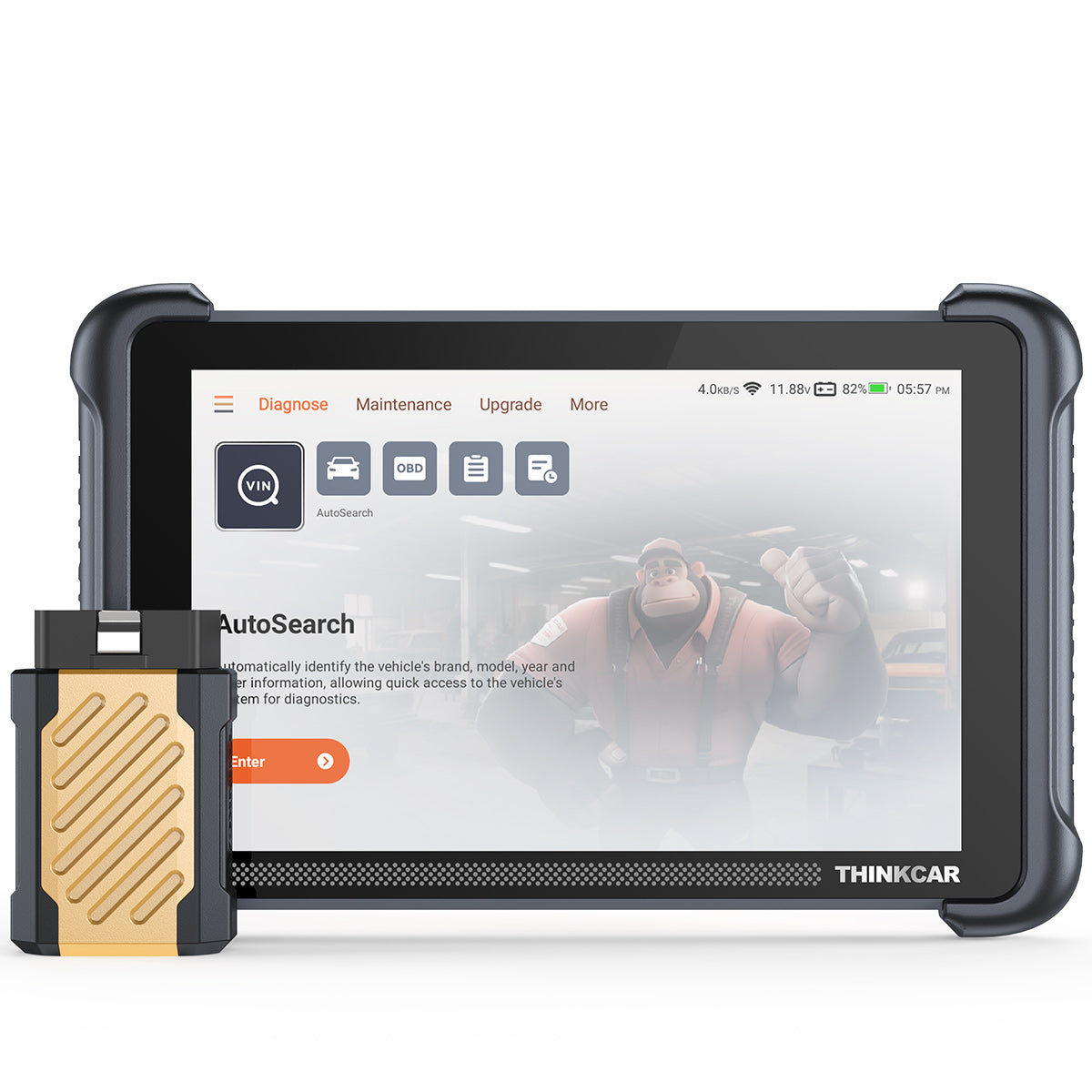
THINKSCAN 689BT
Professional OE-level scanner with full-system diagnostics, live data graphing, fuel trim analysis, and advanced troubleshooting functions.
View Product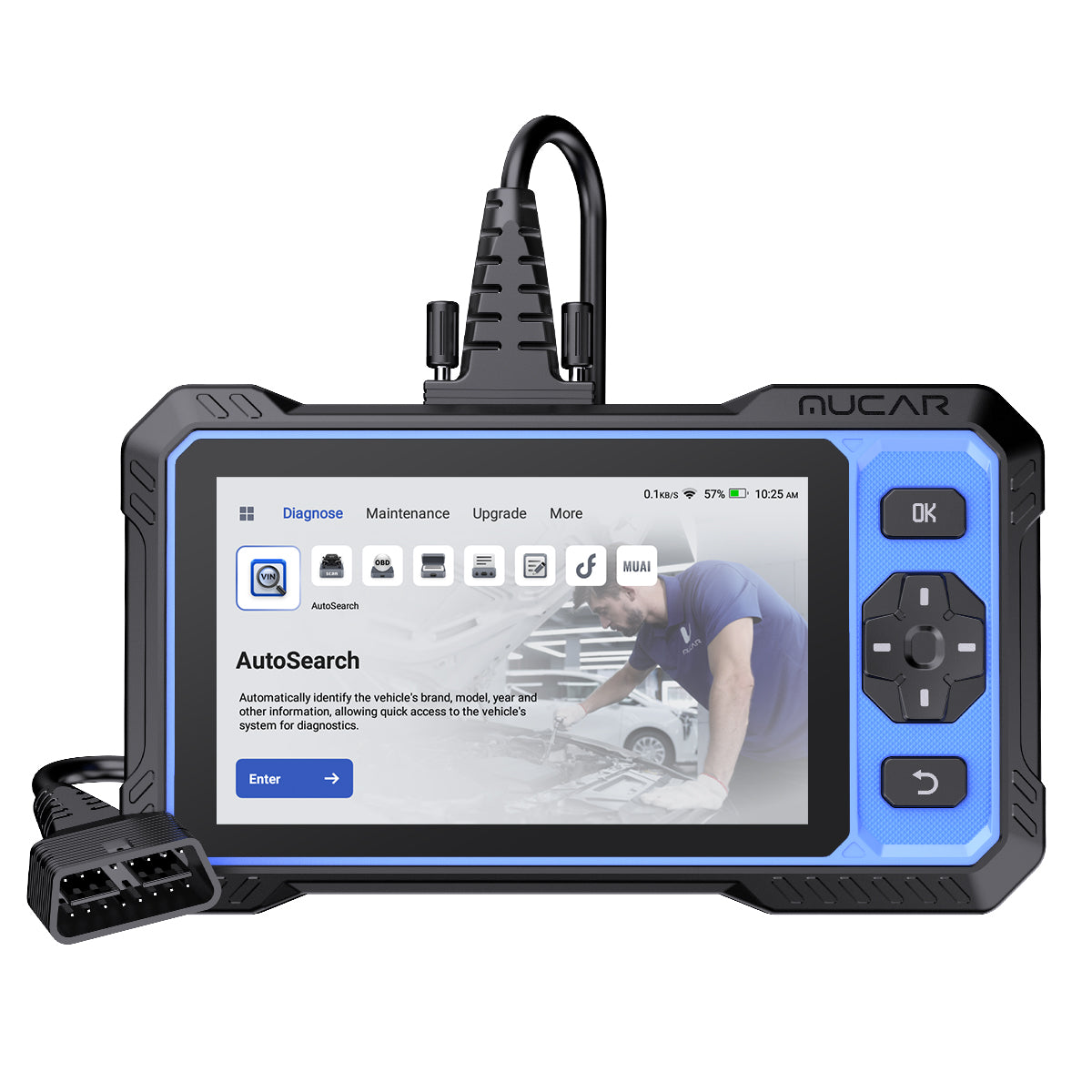
MUCAR 682
OE-level diagnostics, live data, active tests, excellent value for DIY users.
View Product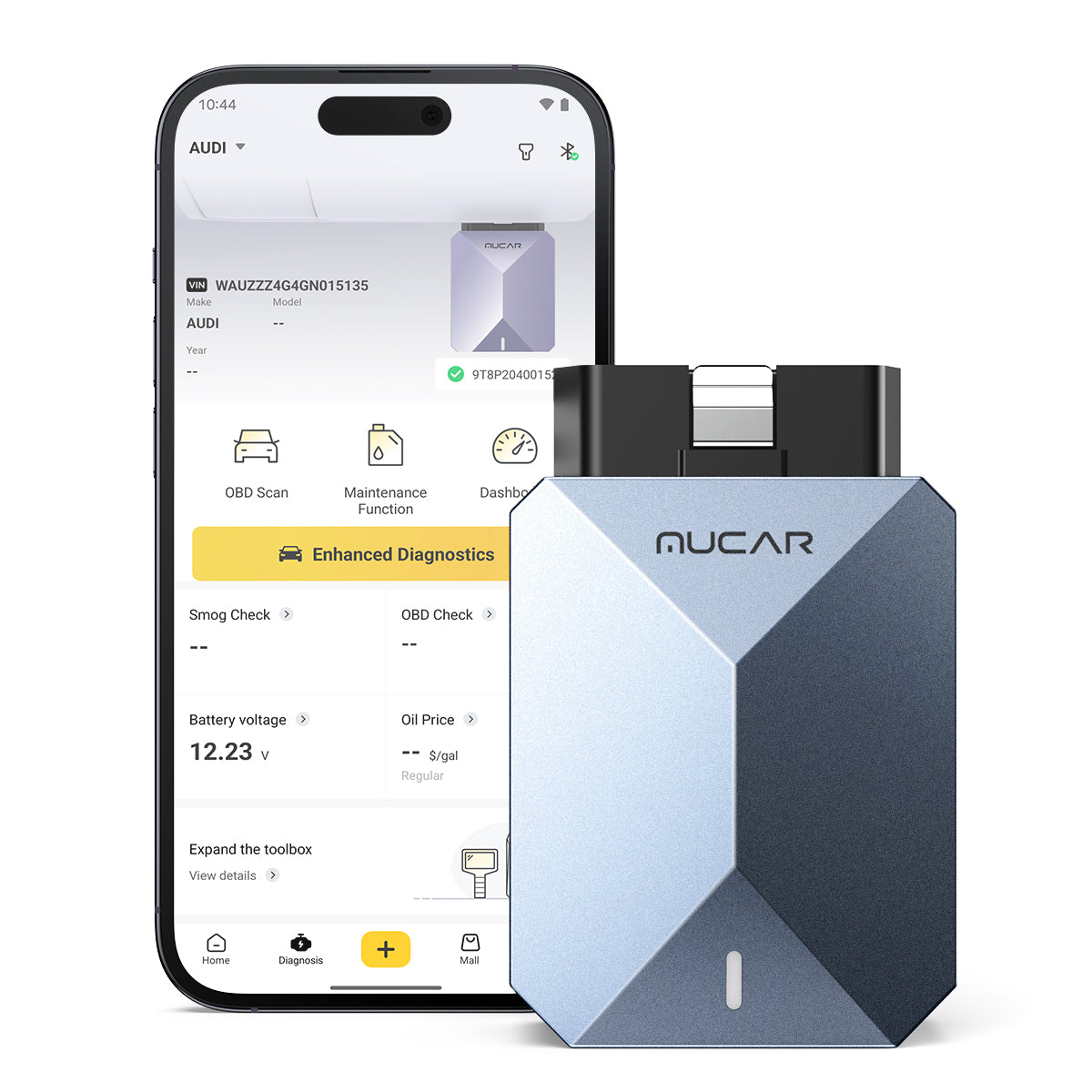
MUCAR BT200 MAX
Affordable Bluetooth scanner for checking MAF live data, reading DTCs, and clearing codes.
View ProductThe 3-Step MAF Sensor Test Using Live Data
Step 1: Scan for Diagnostic Trouble Codes
Plug your OBD2 scanner into the port under your dashboard and check for active, pending, or stored codes.
If you see a code like P0101, it means the airflow signal is outside its expected operating range. But don't rush to buy a new part just yet! A cracked intake boot, loose clamp, or wiring corrosion can trick the computer into throwing the exact same code.
Step 2: Set Up Your Scanner for Live Data Monitoring
This is where we get into actual MAF sensor testing. Switch your OBD2 scanner over to the Live Data stream. You're looking for a PID parameter labeled MAF, Mass Air Flow, or Air Flow Rate.
Start the engine and watch how the numbers behave. A healthy sensor should react instantly and smoothly to changes in engine load. If the value stays completely frozen, jumps erratically, or spikes into unrealistic numbers, the sensor is likely failing.
Step 3: Evaluate Your MAF Sensor Readings
To confirm if the sensor is accurate, you need to check the data at different RPMs. While exact numbers depend on your engine size, here is a breakdown of what is a normal MAF sensor reading across most vehicles.
| Engine Type | MAF Sensor Reading at Idle (approx. 700-800 RPM) | MAF Sensor Readings Around 2500 RPM |
|---|---|---|
| Small 4-Cylinder | 2 – 7 g/s | 9 – 18 g/s |
| V6 and V8 Engines | 4 – 10 g/s | 15 – 30 g/s |
Tech Tip: A quick rule of thumb for a standard engine at idle is that your MAF reading should roughly match your engine displacement in liters (e.g., a 2.0L engine should read around 2.0 g/s at idle).
The main takeaway when learning how to test a mass air flow sensor is to focus on whether the readings increase smoothly as engine load changes. The numbers should scale up cleanly as you rev the engine.
Double-Checking Performance with Fuel Trims
Want to know how to check MAF sensor accuracy like a professional technician? Cross-reference your airflow numbers with Short-Term Fuel Trim (STFT) and Long-Term Fuel Trim (LTFT).
Fuel trims show how much the ECU is compensating for an imbalance. For example, if your MAF reading looks unusually low, but your LTFT is reading way up at +15% or higher, the engine is running lean. The computer is actively adding extra fuel because the MAF is under-reporting the real amount of air entering the system.
Don't Skip the Visual Inspection
Learning how to check mass air flow sensor issues isn't just about reading screens. Pop the hood and inspect the physical components:
- Check the air filter for heavy dirt or oil tracking.
- Look for cracks or tears in the rubber intake boots (unmetered air leaks here will ruin your readings).
- Unplug the MAF electrical connector and check for bent pins, moisture, or green corrosion.
- Look inside the sensor bore to see if the delicate hot wire is coated in dirt or oil.
Common Diagnostic Pitfalls to Avoid
Replacing the Sensor Immediately: Jumping straight to a replacement just because a P0101 code popped up often wastes money. Always back up the code with live data.
Ignoring False Air (Vacuum Leaks): An unmetered air leak downstream of the sensor allows air to bypass the MAF completely, creating lean codes and rough idling while the sensor itself is perfectly fine.
The Verdict: When to Replace the MAF Sensor
You can confidently condemn the sensor if:
- Airflow readings remain stagnant, unstable, or completely out of range during rev tests.
- Fuel trim data indicates a massive correction that matches the skewed MAF values.
- You have thoroughly ruled out intake unmetered air leaks, wiring damage, and a clogged air filter.
FAQ
How to test a MAF sensor?
The best way is to connect an OBD2 scanner, select live data, and monitor the airflow rate in grams per second (g/s) while changing engine speeds. A healthy sensor will react smoothly as you rev the engine.
What is a normal MAF sensor reading at idle?
Most small four-cylinder engines display approximately 2–7 g/s at idle, while larger V6 and V8 engines may show 4–10 g/s. Actual values vary by engine design.
How to check a MAF sensor?
Inspect the sensor, wiring, connectors, intake hoses, and air filter. Then use an OBD2 scanner to review airflow data and confirm sensor performance.
Can a bad MAF sensor trigger a check engine light?
Yes. Incorrect airflow information can trigger diagnostic trouble codes such as P0100, P0101, P0102, P0103, and P0104.
What codes are related to a MAF sensor?
The most common MAF-related codes are:

Share:
P0100 P0101 P0102 P0103 and P0104 MAF Sensor Codes Explained
Best Car Diagnostic Scanner for MAF Sensor Problems