
A car breakdown on highway can happen without warning, caused by problems such as engine power loss, warning lights, electrical failures, or sensor-related issues. Besides knowing how to stay safe, drivers also need to understand what caused the problem and whether the vehicle can continue driving.
Using an OBD2 scanner during a roadside breakdown can help identify the possible cause by reading diagnostic trouble codes (DTCs), checking live data, and detecting issues related to the engine, fuel system, ignition system, or sensors.
Many drivers are less concerned about the exact cause of the failure than what action to take next. Is it safe to keep driving? Should you pull over immediately? Do you need roadside assistance, or can the vehicle be checked before calling a tow truck?
Learning how to use an OBD2 scanner can help answer these questions. An OBD-II scan tool can provide important information about the vehicle condition, helping drivers understand what is a DTC code, evaluate possible fault areas, and make safer decisions during a roadside emergency.
- What to Do When Your Car Breaks Down on Highway
- Common Causes of Highway Breakdowns
- How to Diagnose a Highway Breakdown with an OBD2 Scanner
- How to Read DTC Codes and Live Data
- When You Should Continue Driving or Call for Assistance
Emergency Steps When a Vehicle Breaks Down on the Highway
No matter what caused the breakdown, the most important priority when a vehicle suddenly loses power is not diagnosing the fault immediately, but ensuring the safety of everyone inside the vehicle.
1. Stay Calm and Move the Vehicle to the Emergency Lane if Possible
If the vehicle suddenly loses power, dashboard warning lights appear, the engine begins shaking heavily, or unusual noises occur, immediately turn on the hazard lights, keep both hands firmly on the steering wheel, release the accelerator, and avoid hard braking or sudden steering inputs.
Even if the engine has stalled, the vehicle can usually continue rolling using momentum. Try to move safely toward the right lane and stop in the emergency lane, shoulder, or emergency stopping area.
It is important to understand that after the engine shuts off:
- Brake assist may become weaker, making the brake pedal feel harder and requiring more force;
- Power steering assist may stop working, causing the steering wheel to feel significantly heavier;
- Do not attempt to suddenly cross multiple lanes.
If the vehicle cannot be moved at all, immediately keep the hazard lights on and contact roadside assistance.
2. Secure the Vehicle and Decide Whether It Is Safe to Exit
After stopping, immediately shift into Park (automatic transmission) or 1st gear (manual transmission), engage the parking brake, and keep the hazard lights on. At night or in poor visibility conditions, turn on the low beams or parking lights to improve visibility.
Do not rush to exit the vehicle. First assess whether the surrounding environment is safe.
3. Decide Whether to Place a Warning Triangle Based on Conditions
A warning triangle should only be placed if personal safety can be ensured first.
If the vehicle is fully stopped in the emergency lane, the shoulder is wide enough, weather conditions are clear, visibility is good, and you can safely exit from the right side away from traffic, place the warning triangle behind the vehicle:
- In normal conditions: at least 150 meters behind the vehicle;
- In rain, fog, or at night: ideally more than 200 meters behind the vehicle.
After placing the warning triangle, move to a safe area immediately and do not remain near the vehicle.
Do Not Exit the Vehicle if Conditions Are Dangerous
In the following situations, placing a warning triangle may be too dangerous:
- Heavy rain or dense fog;
- Lightning or strong winds;
- Extremely poor nighttime visibility;
- Very narrow shoulder space;
- Heavy traffic flow;
- The vehicle is stopped near a curve, hill crest, or blind spot.
In these situations:
- Stay inside the vehicle;
- Keep hazard lights and low beams on;
- Keep seat belts fastened;
- Engage the parking brake;
- Call roadside assistance immediately.
On highways, getting out of the vehicle carelessly can sometimes be more dangerous than not placing a warning triangle.
Leave the Vehicle Immediately if There Is Smoke, Fire, or Fuel Leakage
If any of the following occurs:
- Smoke from the engine bay;
- Visible flames;
- Strong burning smell;
- Fuel leakage;
- Signs of electrical short circuits.
All occupants must immediately exit from the side away from traffic, move behind the guardrail, and stay at least 50 meters away from the vehicle while calling emergency services. Do not return to the vehicle to retrieve personal belongings.
4. Move All Occupants Behind the Guardrail While Waiting for Assistance
If it is safe to exit the vehicle and there is no fire risk, all passengers should leave from the right side and wait behind the guardrail or in another safe area away from traffic.
Never stand in front of or behind the vehicle, and do not remain near the shoulder discussing the problem.
5. Contact Professional Roadside Assistance and Provide an Accurate Location
You should contact:
- Highway roadside assistance services;
- Insurance roadside assistance providers;
- Tow truck companies;
- Emergency services if necessary.
Provide the following information:
- Highway name and travel direction;
- Nearest exit number;
- Mile marker or roadside marker number;
- Vehicle make, color, and license plate information;
- Current symptoms or fault condition;
- GPS location or smartphone live location data.
6. Determine the Type of Assistance Needed Based on the Symptoms
Not every breakdown requires towing.
| Fault Type | Common Symptoms | Recommended Action |
|---|---|---|
| Flat tire | Loud bang, vehicle pulling to one side | Replace spare tire or request mobile tire service |
| Dead battery | Clicking sound during startup | Jump-start or battery replacement |
| Out of fuel | Engine suddenly stalls | Request fuel delivery |
| Locked keys inside vehicle | Unable to access vehicle | Call lockout service |
| Engine overheating | Temperature gauge in red zone, steam from engine bay | Shut off engine, allow cooling, arrange towing |
| Severe engine noise | Metal knocking or grinding | Stop engine immediately and tow vehicle |
| Brake failure | Abnormal pedal feel or reduced braking performance | Stop immediately and do not continue driving |
| Transmission failure | Unable to shift gears or move vehicle | Arrange towing |
| Major oil or coolant leak | Visible fluid leaking onto the ground | Stop vehicle and arrange towing |
If you are unsure whether the vehicle is still safe to drive, the safest option is to arrange towing rather than continue driving and risk further damage.
Common Causes of Highway Breakdowns
Many drivers treat “engine stalling” and “vehicle breakdown” as the same thing, but they are not exactly the same. Stalling simply means the engine stops running, while a breakdown usually means the vehicle can no longer continue driving and has to stop on the roadside.
In many severe car breakdown on highway situations, the real issue may involve multiple systems working together instead of a single failed component.
Not every highway breakdown is caused by a major mechanical failure. Sometimes the problem is as simple as low fuel, a weak battery, or a temporary sensor issue. In other situations, the fault may involve the fuel system, ignition system, cooling system, or electronic control system. Knowing the more common causes can make it easier to roughly judge what may have happened when the vehicle suddenly loses power.
Fuel System Problems
Fuel supply issues are one of the more common reasons vehicles break down on the highway. Typical symptoms include poor acceleration, vehicle shaking, and a situation where the starter motor cranks normally but the engine will not restart.
Common causes include running out of fuel, fuel pump failure, faulty fuel pump relays, injector problems, or low fuel pressure.
If the vehicle simply runs out of fuel, adding fuel may be enough to get it running again once the situation is safe. Some vehicles may not give accurate low-fuel warnings because of fuel level sensor or gauge issues. Using an OBD2 scanner to check fuel system data can sometimes help spot abnormal conditions earlier.
In some cases, drivers may notice fuel injector misfire symptom; or symptoms of a bad fuel pressure sensor; before the vehicle completely stalls.
Ignition System Problems
Worn spark plugs, failed ignition coils, or crankshaft position sensor issues can all cause engine misfires. The vehicle may shake noticeably, lose power, or even stall while driving.
Sometimes people wonder about can a knock sensor cause misfire under load. Not very common, but it can happen.
For misfires, testing ignition coil usually comes up early in the process, especially when spark is suspected.
An obd-ii scan tool will often show related fault codes such as P0300 or P0301–P0308.
Sensor Failures
Modern engines rely heavily on sensors to control fuel injection and ignition timing. Faults involving the MAF sensor, MAP sensor, oxygen sensors (O2), crankshaft position sensor, or camshaft position sensor can cause unstable idle, poor acceleration, or sudden engine stalling on the highway.
Common maf air flow sensor symptoms include rough idle, unstable acceleration, and reduced fuel economy.
Charging System Failure
If the alternator stops charging, the vehicle will rely entirely on battery power. As voltage continues dropping, the ECU, fuel pump, and ignition system may eventually stop functioning. Common symptoms include flickering dashboard lights, heavy steering, sudden A/C shutdown, and eventually complete engine shutdown.
Cooling System Problems
Coolant leaks, water pump failure, or radiator fan issues can all cause engine overheating. If the coolant temperature warning light comes on, the temperature gauge enters the red zone, or steam appears from the engine bay, the vehicle should be stopped immediately. Continuing to drive may lead to severe engine damage or engine seizure.
ECU and Communication System Faults
In newer vehicles, modules such as the ECU, TCU, ABS, and BCM constantly exchange data through the CAN bus network.
When communication issues occur, some scanners may show messages like no powertrain dtcs or freeze frame data, which often points to temporary ECU communication problems or limited module access.
If communication between critical modules fails, the vehicle may enter limp mode, refuse to start, or suddenly lose power while driving.
Diagnosing these problems usually requires a more advanced obd-ii scan tool with manufacturer-level system access.
A highway breakdown can involve several different systems at the same time, so it’s not always easy to judge the situation just from a warning light or the way the car feels while driving. With a portable OBD2 scanner, drivers can check fault codes and live data within minutes and get a clearer idea of what may be wrong and whether it’s safe to keep driving.
How to Diagnose a Car Breakdown on Highway with an OBD2 Scanner
When a car breakdown on highway situation happens unexpectedly, drivers usually have to rely on warning lights, strange noises, or changes in the way the vehicle drives to figure out what’s happening. But in many cases, that alone is not enough to tell whether the car is still safe to drive.
However, using a diagnostic scanner can provide much more reliable information within minutes.
For beginners, understanding how to use car diagnostic tool functions properly can make roadside troubleshooting significantly less stressful.
A portable car fault code scanner can directly read diagnostic trouble codes and live data stored by the ECU, helping drivers make safer decisions during emergencies.
Reading Diagnostic Trouble Codes (DTCs)
Diagnostic trouble codes are standardized records stored by the ECU when abnormal conditions are detected.

Many drivers unfamiliar with diagnostics first ask what is a dtc code after seeing fault codes appear on the scanner screen.
Understanding basic dtc code meaning information helps narrow down whether the issue involves fuel delivery, ignition, charging voltage, or sensor communication.
Each code corresponds to a specific system or component, for example:
- P0300: Random engine misfire
- P0171: System too lean
- P0335: Crankshaft position sensor fault
- P0562: System voltage low
- P0117: Coolant temperature sensor circuit low input
For most drivers, the main value of fault codes is not immediately identifying the exact repair solution, but quickly narrowing down the general direction of the problem. For example, misfire codes often point toward spark plugs or ignition coils, while low voltage codes usually suggest battery or alternator problems.

Freeze Frame Data
Freeze frame data stores operating conditions at the exact moment a fault occurred, including engine speed, vehicle speed, coolant temperature, fuel trim values, and battery voltage.
This works like a snapshot taken when the problem happened. It helps drivers understand whether the issue occurred during highway cruising, hard acceleration, or high-temperature operation instead of only seeing the fault code itself.
Live Data
The best obd2 scanner live data function shows the vehicle’s current operating condition in real time, including:
- Coolant temperature
- Battery and charging voltage
- Mass airflow (MAF)
- Fuel trim values
- Throttle position
- Engine RPM

The value of live data is that drivers can directly identify obvious abnormalities. For example:
- Constantly high coolant temperature may indicate overheating risk;
- Low charging voltage may suggest alternator failure;
- Excessive fuel trim values may indicate intake leaks or air-fuel mixture problems;
- Abnormal airflow readings may point toward the MAF sensor or intake system.
Bidirectional Control / Active Test
Some advanced OBD2 scanners support bidirectional control. Instead of only reading data, they can also activate certain vehicle components directly. During roadside breakdown situations, useful functions include activating the fuel pump and turning on the cooling fan.
Running the fuel pump can help check whether a no-start issue is related to fuel supply. Manually turning on the cooling fan can also help confirm whether an overheating problem is caused by the fan itself or a related control issue.
For everyday drivers, the biggest advantage of bidirectional control is the ability to verify whether key components are actually responding, reducing guesswork and making troubleshooting more reliable.
Battery and Charging System Testing
Many highway breakdowns are not caused by serious engine damage, but by low battery voltage or charging system failure.
Through OBD2 live data, drivers can quickly check system voltage:
- Engine off: typically around 12.4–12.8V;
- Engine running: typically around 13.5–14.8V.
If charging voltage remains unusually low while driving, it often indicates alternator or charging system problems. This information is very useful when deciding whether the vehicle may stall again.
Clearing Fault Codes
After confirming that a problem may be related to a temporary electronic fault, drivers can use an obd2 scanner clear codes function to reset the warning lights and monitor whether the fault immediately returns.

This function does not repair mechanical problems, but it can help determine whether the issue was a temporary glitch or an ongoing hardware fault.
For everyday drivers, the value of an OBD2 scanner is not replacing a professional technician, but providing more reliable information during critical situations. Through fault codes, live data, and active testing, drivers can better understand the affected system, possible risks, and the next steps that should be taken.
During long-distance driving situations, the ability to quickly access objective vehicle data can help drivers decide whether to continue driving or arrange professional repairs.
more calmly whether to continue driving or arrange professional repairs.
How Repair Shops Use Professional OBD2 Diagnostic Tools to Locate Problems Faster
For professional technicians, advanced diagnostic tools can quickly identify the root cause of highway breakdowns through full-system scanning, live data analysis, and active testing. Comparing data across multiple control modules and testing critical components can significantly improve diagnostic efficiency.
Full System Scan
Professional diagnostic tools can scan all vehicle control modules at once, including the engine control module (ECM), transmission control module (TCM), ABS, airbag system (SRS), body control module (BCM), tire pressure monitoring system (TPMS), and battery management system (BMS).

This allows technicians to determine whether the issue involves the transmission, ABS, or body systems rather than only the engine. For example, a vehicle that suddenly loses power on the highway may actually have a communication or anti-theft system issue instead of an engine failure.
Advanced DTC Analysis
In addition to current fault codes, professional tools can also read history codes, pending codes, and manufacturer-specific fault codes.
This helps technicians determine whether a fault is intermittent or continuously present, and whether the issue matches common problems for a specific vehicle model.
Live Data Graphing
Viewing fuel trim, oxygen sensor activity, voltage, coolant temperature, and airflow data in graph form makes it easier to identify intermittent issues. For example:
- Continuous voltage fluctuations may indicate alternator or wiring problems;
- Rapid coolant temperature increases may suggest cooling system faults;
- Slow oxygen sensor response may affect air-fuel ratio control.

Sensor Comparison
Professional diagnostic tools can display multiple related sensor signals at the same time for easier comparison, including:
- Crankshaft and camshaft sensor signals;
- Upstream and downstream oxygen sensors;
- Fuel trim values across multiple cylinders;
- Throttle position versus intake airflow.
This type of comparison often helps technicians narrow down the fault without unnecessary disassembly.
Bidirectional Control
Bidirectional control allows the scanner to directly send commands to the ECU and activate components instead of only reading data.
For highway breakdown diagnosis, common tests include:
- Activating the fuel pump to verify fuel delivery;
- Forcing the cooling fan on to check overheating-related faults;
- Controlling injectors or other actuators to verify proper operation.
This function helps technicians determine whether a stored fault code truly reflects a hardware failure.
ECU Coding and Service Reset Functions
After replacing control modules, sensors, or important components, many vehicles require ECU coding, adaptation, or reset procedures before normal operation can be restored.
Common procedures include:
- Battery registration (BMS Reset)
- Throttle relearn (Throttle Reset)
- Injector coding
- ABS bleeding
- Electronic parking brake reset (EPB Reset)
These functions help reduce rework and improve repair efficiency.
Recommended Professional Diagnostic Tool: THINKCAR THINKSCAN 689BT
For repair shops dealing with highway breakdowns, complex electrical faults, and newer vehicle platforms, the THINKSCAN 689BT combines professional-level functions with practical usability.

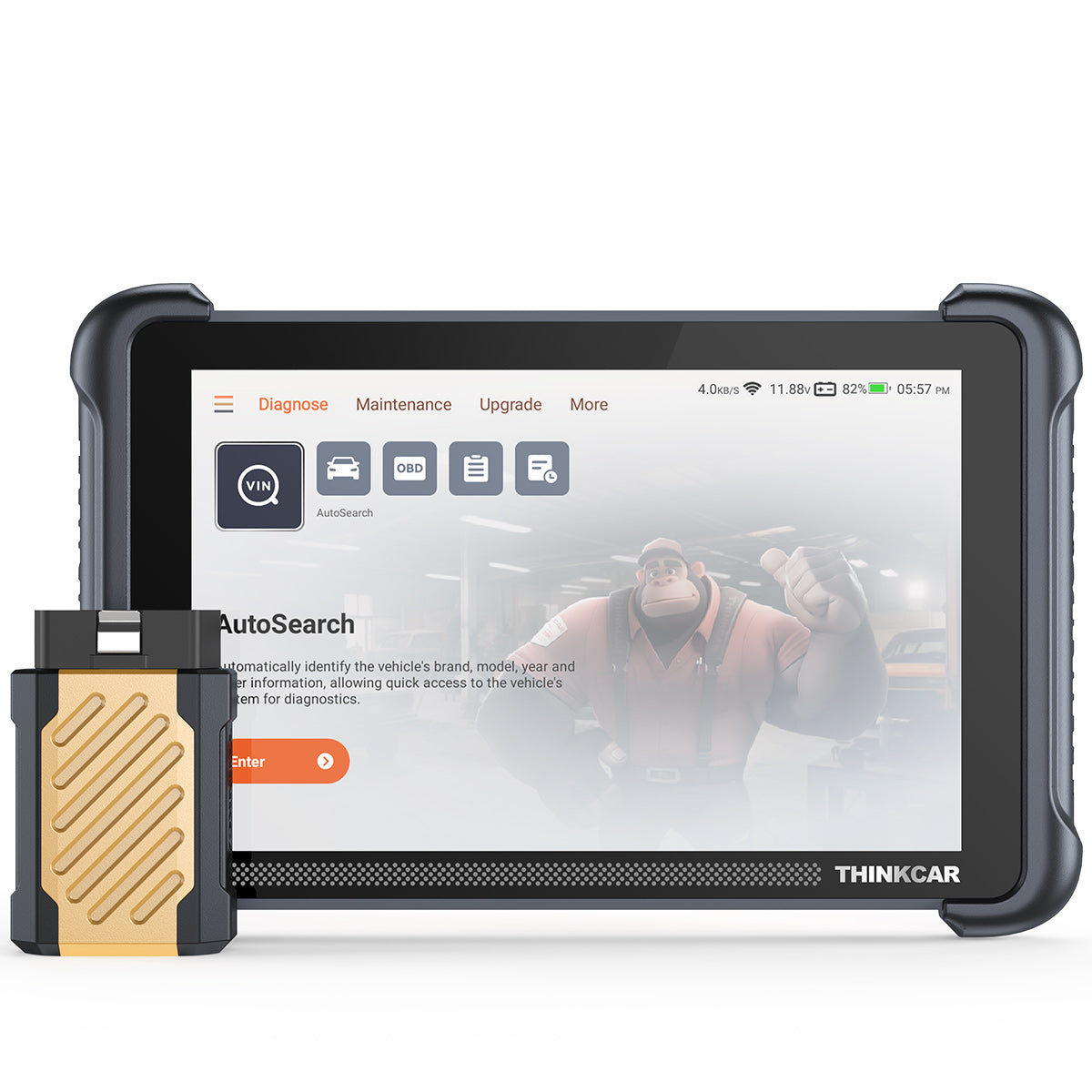
Main features include:
- ECU coding and module adaptation
- Bidirectional control (active tests)
- 35+ maintenance reset functions
- Full-system diagnostics (read/clear codes and live data)
- Support for CAN-FD, DoIP, and FCA AutoAuth
- AutoVIN and one-click full-system scanning
- 8-inch display with wireless Bluetooth connectivity
For technicians, it can quickly identify the root cause of highway breakdowns while also supporting coding, matching, and reset procedures after repairs. For advanced DIY users, it offers diagnostic capability close to professional workshop equipment.
Conclusion
When a vehicle suddenly experiences a car breakdown on highway situation, the most important priority is always safety — moving the vehicle to a safe location and taking the correct emergency steps based on the surrounding conditions.
With modern vehicles, the key is not avoiding every possible failure, but being able to quickly access accurate information, assess risk, and make the right decision when issues happen.
Understanding how to use a obd2 scanner helps drivers quickly check vehicle status and decide whether it is safe to continue driving or better to call for towing or repair.
For technicians, professional diagnostic equipment provides full-system scanning, bidirectional control, live data analysis, ECU coding, and communication testing functions that help identify the true cause of roadside breakdowns much faster.
Whether you are planning a long summer road trip or looking to improve workshop efficiency, a reliable obd-ii scan tool can provide clearer and more objective information when it matters most. Because in many situations, making the right decision depends less on guesswork and more on accurate data.

Share:
Symptoms of a Bad Mass Air Flow Sensor and Common Faulty MAF Sensor Causes
THINKCAR Unveils Tyler as the Industry's First AI Diagnostic Agent at Global Distributors Conference