
During peak travel seasons—whether you’re heading out on a road trip, returning home for the holidays, or driving to a major event—few situations are more frustrating than a crank no start or a car cranks but wont start problem. A car turns over but wont fire condition often indicates a fuel or ignition system issue.
You may already have your bags packed, your route planned, and your accommodations booked. Then you press the start button and the engine does nothing, or it cranks normally but never fires.
This guide is designed as a practical 10-minute troubleshooting process for a car cranks but wont start situation.
Simply follow this process:
> Observe the symptom → Perform the simplest checks → Decide on the next action
In just a few minutes, you can determine:
- Whether the problem can be fixed yourself
- How much time troubleshooting is likely to take
- Whether it is safe to continue your trip
- Whether the vehicle should be taken to a repair shop
- Whether roadside assistance or towing is the best option
- Whether professional diagnosis with an OBD2 scanner live data tool is needed
Stage 1: Diagnose by Symptom
Symptom 1: You Hear a Single Click and Nothing Else Happens
If you hear one click when attempting to start the vehicle and the engine does not turn over—or turns very slowly—while the dashboard lights dim or the radio behaves abnormally, the most common cause is a weak or failing battery.
How to Check
Turn on the headlights. If they appear noticeably dim, battery voltage is likely low.
Watch the instrument cluster while attempting to start the engine. If the lights dim sharply, cranking voltage is dropping significantly.
Consider the age of the battery. If it has been in service for more than 3–5 years, battery deterioration is likely.
Inspect the battery terminals for white or bluish-green corrosion and make sure the connections are tight.

Important Safety Warning
If you notice a sulfur smell (similar to rotten eggs) or the battery case appears swollen, do not attempt a jump-start. Internal short circuits may have caused hydrogen gas buildup, and the battery could rupture. The safest option is to have the vehicle professionally serviced.
Recommended Action
If there is no swelling or odor, try jump-starting the vehicle and clean or tighten the battery terminals if needed. If repeated jump-start attempts do not restore normal starting, please take the vehicle to a repair shop for further diagnosis.
Symptom 2: The Engine Cranks Slowly
A slow-cranking condition typically indicates a low state of charge (SoC), though it is not a definitive sign of total battery failure. If ignored for too long, slow cranking may eventually develop into a car cranks but wont start condition.
- Common causes include:
- Frequent short trips
- Extended periods of vehicle storage
- Electrical loads draining the battery
- Reduced alternator charging performance
Recommended Action
Recharge the battery using a charger. Depending on battery condition and charger output, a full charge may take anywhere from 2 to 8 hours or longer.
If the engine starts successfully, driving for an extended period may help restore charge.
If the battery repeatedly fails to hold a charge, replacement should be considered.
Symptom 3: Battery Warning Light Appears and the Battery Keeps Going Dead
If the battery warning light illuminates while driving, the headlights flicker, there is a burning rubber smell from the engine bay, or a newly installed battery quickly loses charge, the alternator or voltage regulation system should be suspected.

How to Check with a Multimeter or Scan Tool with Live Date
- Engine off: approximately 12.6 volts
- Engine running: typically 13.5–14.8 volts
If voltage remains below 13 volts with the headlights and air conditioning on, charging output may be insufficient. Using an OBD2 scanner live data tool can make charging system diagnosis easier.
If voltage exceeds 15 volts, an overcharging condition may be present.
Recommended Action
Even if the vehicle can be jump-started, long-distance driving is not recommended. An alternator failure can cause the engine to stall while driving.
Have the charging system tested as soon as possible. If the vehicle will not start, towing may be necessary.
Symptom 4: The Engine Cranks Normally but Will Not Start (Crank no Start)
This is the classic car cranks but wont start condition.
Since the starter motor is operating normally, the issue is typically related to the fuel system, ignition system, or critical engine sensors.
Step 1: Check Fuel Level
If the fuel gauge is near empty—or if you suspect the gauge may be inaccurate—add 1–2 gallons of fuel and try again.
Fuel level readings can be misleading, especially when parked on an incline or when the fuel level sensor is faulty.
Step 2: Listen for the Fuel Pump
Turn the key to the ON position without starting the engine.
Listen near the rear seat or fuel tank area for a humming sound lasting 2–3 seconds.
If no sound is heard, the fuel pump, relay, or related fuse may be faulty.
Step 3: Check for a Strong Fuel Smell
If you smell gasoline after repeated cranking but the engine does not start, fuel is likely reaching the cylinders. Using an OBD2 scanner live data tool can make charging system diagnosis easier.
The problem is more likely related to ignition, fuel delivery, or sensor-related issues, including camshaft position sensor symptoms such as a bad camshaft position sensor:
- Spark plugs
- Ignition coils
- Ignition control modules
- Crankshaft position sensor
Avoid repeated cranking, as excess fuel can foul the spark plugs. Wait 5–10 minutes before trying again.
Step 4: If There Is No Fuel Smell
If there is no noticeable fuel odor, fuel may not be reaching the cylinders.
Possible causes include:
- Fuel pump failure
- Clogged fuel filter
- Faulty fuel injectors
- Low fuel pressure
If the tank contains fuel and the fuel pump does not prime, professional diagnosis is recommended.
Step 5: Read Trouble Codes with an OBD2 Scanner
Scan the vehicle’s control modules to isolate the fault. Reference the following Diagnostic Trouble Codes (DTCs):
- P0300–P0308: Engine Misfire (Random or Cylinder-Specific)
- P0350–P0362: Ignition Coil Circuit Malfunction
- P0335: Crankshaft Position (CKP) Sensor Circuit Fault. Related camshaft sensor failure symptoms may also appear when timing signals become unstable.
Pro Tip: If multiple misfire codes are present, prioritize the CKP sensor or primary ignition circuit codes first, as these often trigger secondary misfires.
Symptom 5: The Engine Starts but Immediately Stalls
If the engine starts and shuts off within a few seconds, common causes include:
- Insufficient fuel delivery
- Immobilizer or anti-theft system intervention
- Idle control issues
- Faulty sensor signals or other camshaft sensor issues
Observe whether the engine stalls consistently after the same amount of time and check for security warning indicators.
This condition generally requires further diagnosis and is not suitable for long-distance travel until repaired.
Stage 2: Common Hidden Causes
Transmission Position and Anti-Theft System
Automatic transmission vehicles must be in Park or Neutral to start.
If the range sensor is misadjusted, moving the shift lever firmly between positions may help.
For push-button start vehicles, a weak key fob battery may prevent the vehicle from recognizing the key. Holding the key fob directly against the start button may allow the engine to start.
Blown Fuses
A blown fuse can disable critical systems such as ignition, the ECU, or the fuel pump.

Check the fuse box under the dashboard or in the engine compartment. Look for fuses labeled:
- IGN
- ECU or ECM
- Fuel Pump
If a fuse element is broken or darkened, replace it with one of the same amperage rating.
If the replacement fuse blows again, an electrical short or component failure is likely present.
Poor Ground Connections
Loose or corroded engine and chassis ground straps can cause:
- Flickering lights
- Hard starting
- Electrical malfunctions
Inspect all visible ground points. Clean corrosion with a wire brush or a baking soda and water solution, then retighten the connections.
If cleaning does not restore a solid connection, or if the ground cable is visibly damaged, the cable should be replaced.
Timing Belt Failure
If the engine cranks unusually fast and sounds as if there is little resistance, or if you hear metallic impacts from inside the engine, a broken timing belt should be considered.
Most timing belts require replacement between 60,000 and 100,000 miles, depending on the manufacturer.
If timing failure is suspected, stop cranking immediately and have the vehicle towed to prevent severe engine damage.
10-Minute Quick Decision Guide
Single click: Check the battery and attempt a jump-start.
Slow cranking: Recharge the battery and inspect terminals.
Battery light while driving: Suspect alternator failure.
Engine cranks but will not start: Check fuel level, fuel pump operation, and fault codes.
Starts then stalls: Further diagnosis is recommended before continuing the trip.
How to Respond Quickly and Prevent Starting Problems
By following the steps above, most drivers can identify the likely cause of a starting problem within 10 minutes. In real-world repairs, however, it is often difficult to confirm the exact fault based on sounds, smells, and visual inspection alone. Going directly to a repair shop may also require significant time and expense.
But if you have an OBD2 scanner on hand, you can usually confirm the direction of the diagnosis within just a few more minutes. Compared with relying only on sounds, smells, and experience, a diagnostic scanner can read vehicle data directly and help you determine more accurately whether the problem is related to the battery, ignition system, fuel system, or a critical sensor.
How to Use an OBD2 Scanner to Diagnose Starting Problems
1. Read Diagnostic Trouble Codes (DTCs)
Even when the dashboard warning light is off, the ECU may already have stored relevant fault codes. A full system scan should always be the first step, with focus on the engine, ignition, and electrical control modules.
Typical OBD2 functions include:
- Read DTCs and view fault definitions and possible causes
- Clear temporary fault codes
- Scan for pending codes that have not yet triggered the check engine light
Common starting-related DTCs:
- P0300–P0308 — Engine misfire detected
- P0350–P0362 — Ignition coil primary/secondary circuit faults
- P0335 — Crankshaft position sensor malfunction
- P0562 — System voltage low
2. Monitor Cranking Voltage
Battery performance under load is critical during engine cranking.
Most professional OBD2 scanner live data tools or battery diagnostic functions can display real-time voltage drop while starting.
Reference values:
Above 10.0V: Battery condition is generally good
9.6V to 10.0V: Borderline; the battery is beginning to degrade or is undercharged.
Below 9.6V: Capacity is insufficient. Replacement is likely required.
A significant voltage drop during cranking often indicates weak battery health, corroded terminals, or high resistance in the starting circuit.
3. View Live Data
A scan tool with live data can help confirm whether the engine is receiving key sensor signals during cranking.
- Engine RPM
- Battery Voltage
- Engine Coolant Temperature (ECT)
- Intake Air Temperature (IAT)
- Throttle Position
4. Check Freeze Frame Data
Freeze frame data captures the vehicle operating conditions at the moment a fault code is stored, including RPM, voltage, temperature, and engine load.
Many technicians rely on freeze frame obd2 information to diagnose intermittent starting problems more accurately.
This can help determine whether the issue occurred during a cold start, hot restart, or while driving. It also helps explain how to read freeze frame data when diagnosing intermittent issues.
This information is particularly useful for starting problems that cannot be reproduced consistently.
5. Decide Whether the Vehicle Can Be Driven
Based on DTCs and live data, a quick decision can be made on whether the vehicle is safe to operate or requires immediate attention.
Generally manageable conditions:
- Low battery voltage with no major system faults
- Loose or corroded battery terminals
- Pending or intermittent fault codes
- Minor voltage fluctuation issues
Repair recommended as soon as possible:
- Crankshaft or camshaft position sensor faults
- Fuel delivery system issues (e.g., fuel pump weakness)
- Starter motor degradation or failure signs
Towing strongly recommended:
- Immobilizer or anti-theft system malfunction
- ECU communication failure (CAN bus errors)
- Severe charging system failure (alternator not charging)
By using an OBD2 diagnostic scanner, you can not only narrow down the possible causes much more quickly, but also arrive at the repair shop with a clear understanding of what is likely wrong. This helps avoid unnecessary parts replacement and reduces the risk of delays caused by misdiagnosis.
For drivers who frequently take road trips or are preparing for long-distance travel, this type of tool is highly useful for both emergency troubleshooting and routine vehicle maintenance.
Recommended OBD2 Tools for No-Start Diagnosis
When a car cranks but does not start, the issue may come from the battery, ignition system, fuel delivery, or sensors. An OBD2 scanner helps narrow this down by combining fault codes with real-time data during cranking.
MUCAR 892BT AI Diagnostic Scan Tool
MUCAR 892BT provides access to full vehicle systems, not just basic engine codes, which is useful when a starting issue involves more than one area.
It is often used when fault symptoms are mixed, intermittent, or when basic checks do not clearly point to a single cause. It is also suitable for keeping in the vehicle for long trips where a wider range of system checks may be needed.

Key functions:
- Full-system diagnostics across all control modules
- Live data during engine cranking (voltage, RPM, sensor signals)
- Bi-directional control for component activation tests
- ECU coding support
- Reads fault codes and definitions through the built-in ECU code reader
In no-start situations, it allows you to verify whether the issue is related to power supply drop, missing crank signal, or communication between key modules.
ThinkDiag 2 Bi-Directional Diagnostic Scan Tool
ThinkDiag 2 is a compact option designed for quick checks through a mobile device.
It is mainly used when you want a fast overview of system status before deciding whether further inspection or repair is needed.
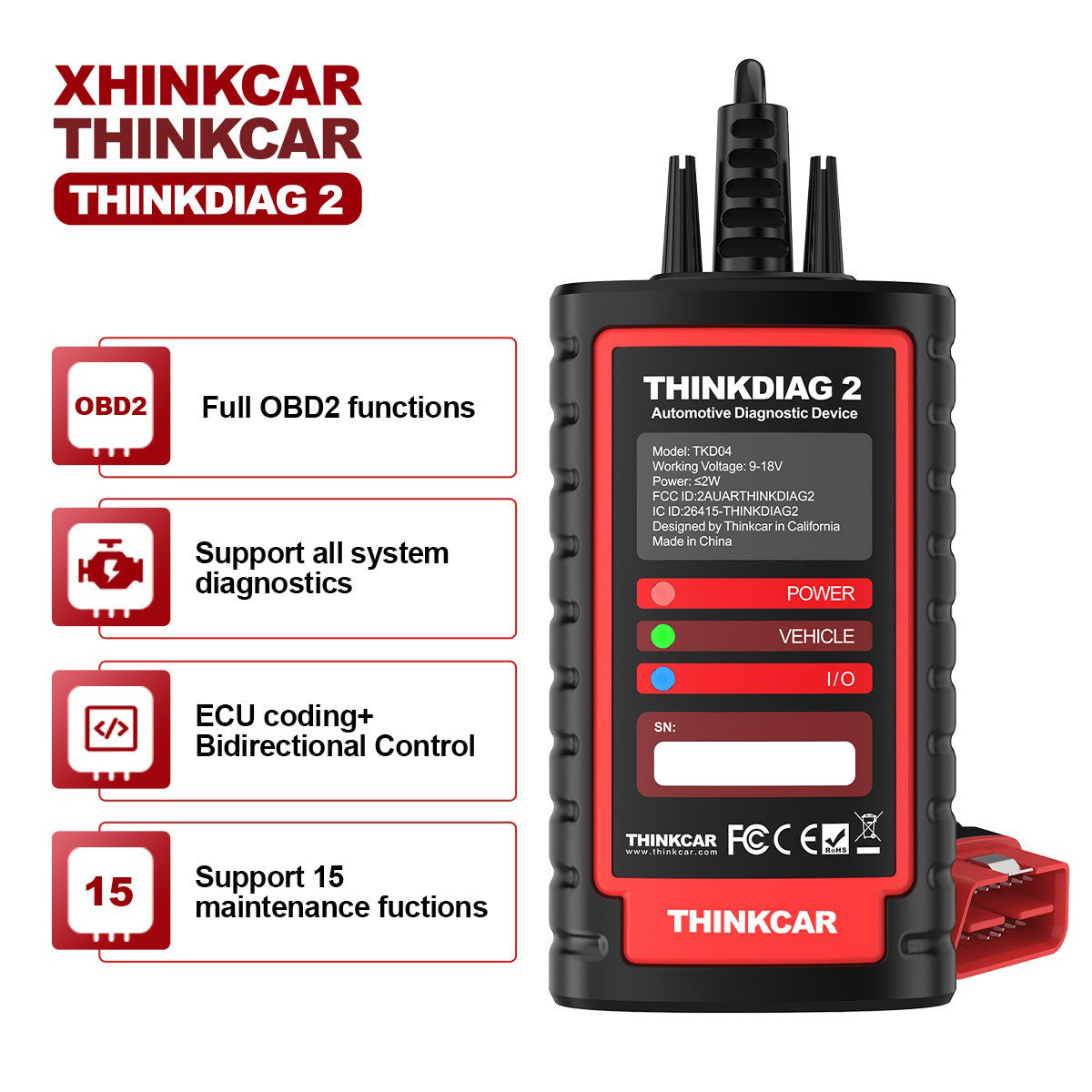
Key functions:
- Full-system scanning via app
- Live data monitoring for engine parameters
- Basic bi-directional tests
- CAN-FD support for newer vehicles
- Bluetooth connection with phone or tablet
In practice, it is used to check whether the starting issue is linked to electrical power, fuel delivery, or sensor-related faults.
Simple takeaway
- Mixed or unclear symptoms / broader system checks / travel backup → MUCAR 892BT
- Quick status check / everyday troubleshooting / portable use → ThinkDiag 2
How to Prevent Starting Problems Before a Long Trip
Before setting out, spend 5–10 minutes performing these basic checks:
For a more complete checklist, see our guide to preparing your vehicle for long-distance travel.
Conclusion
When your car will not start, the most effective approach is not to understand every possible mechanical theory. It is to troubleshoot in the correct order:
> Observe the symptom → Perform the fastest checks → Take the most effective action
Using the process in this guide, most common starting problems can be evaluated in about 10 minutes.
You can quickly determine whether the issue can be handled yourself, whether the trip can continue safely, and whether professional repair is necessary.
If you have an OBD2 scanner live data tool, diagnosis becomes faster and more accurate, especially during a car cranks but wont start situation. helping you avoid unnecessary parts replacement and reducing the risk of being stranded during travel.

Share:
The 5 Best Diagnostic Scanners for DIY Car Repairs in 2026
A Robot Sat in the Driver's Seat: THINKCAR and MUCAR Brought AI Diagnostics to 200+ KOLs at the AliExpress Brand+ Summer Party in London